
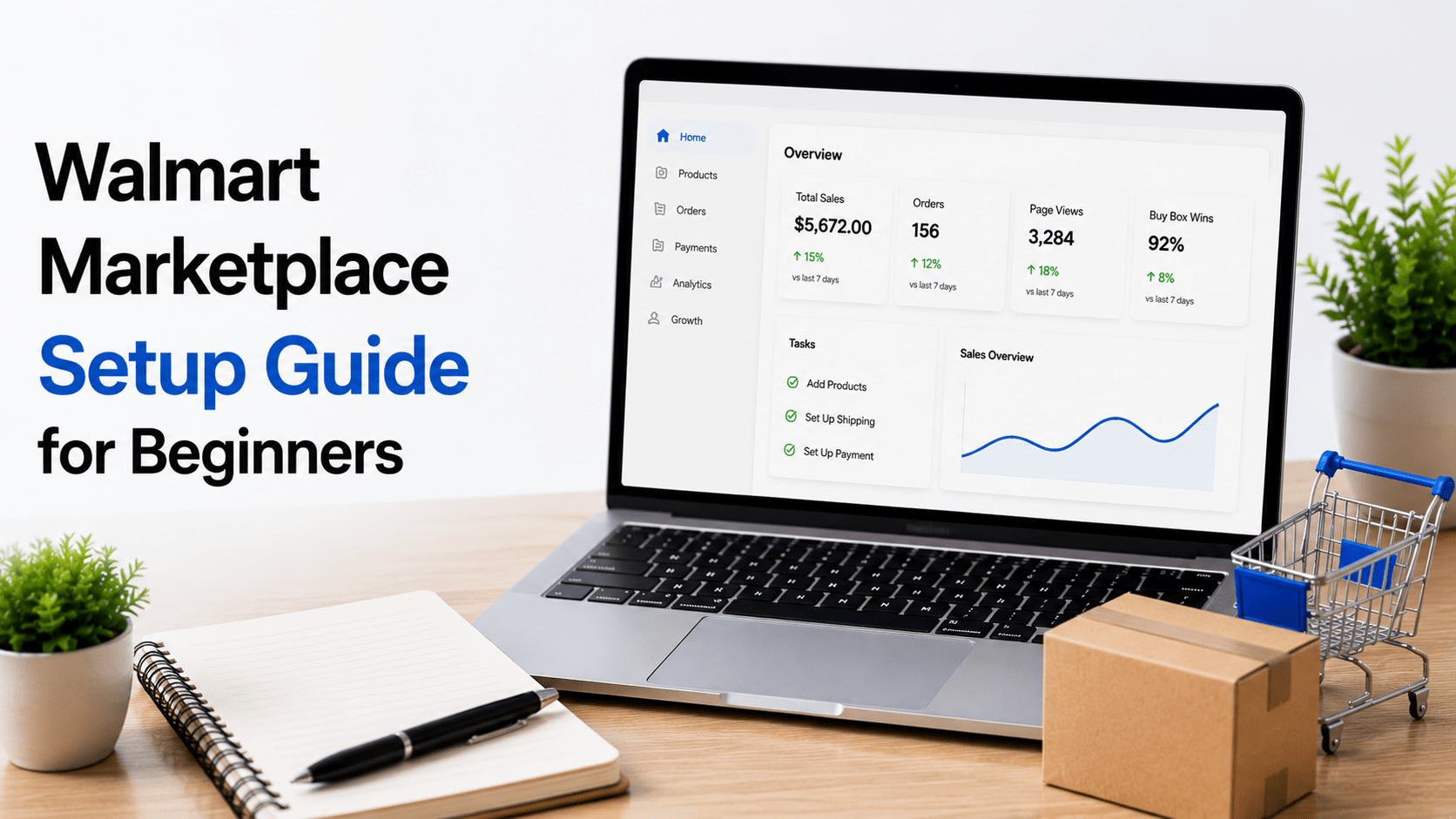
Walmart Marketplace Setup Guide for Beginners
Selling on Walmart Marketplace is becoming one of the most effective ways for businesses to expand their online presence and reach millions of shoppers across North America. As Walmart continues to grow its ecommerce operations, more sellers are turning to the platform as an alternative and complement to Amazon, Shopify, and other online marketplaces.
For new sellers, getting started may seem overwhelming, but the setup process is relatively straightforward when approached correctly. From account registration and product listings to optimization and fulfillment, building a strong foundation is essential for long-term success.
At Amz Northland, we help businesses launch and grow on Walmart Marketplace through account setup, listing optimization, marketplace SEO, AI SEO strategies, advertising management, and ecommerce consulting services.
In this beginner-friendly guide, we’ll walk through the key steps involved in setting up a Walmart Marketplace account and preparing it for growth.
Why Sell on Walmart Marketplace?
Walmart Marketplace gives third-party sellers access to one of the largest online shopping audiences in North America. Millions of customers visit Walmart.com every month looking for products across a wide range of categories.
Unlike building traffic to a standalone website, Walmart provides sellers with access to an established customer base and trusted brand reputation.
Some of the benefits include:
• Access to millions of shoppers
• Growing ecommerce market share
• Lower marketplace competition in some categories
• Walmart Fulfillment Services (WFS)
• Advertising opportunities through Walmart Connect
For businesses looking to diversify beyond Amazon, Walmart Marketplace can become a valuable sales channel.
Step 1: Apply for a Walmart Marketplace Account
The first step is submitting a seller application through Walmart Marketplace.
During the application process, Walmart typically requests information about your business, including company details, product categories, fulfillment capabilities, and ecommerce experience.
Walmart reviews applications carefully to maintain marketplace quality. Having an established business and a professional online presence can help improve your approval chances.
Providing accurate and complete information during the application stage is important because incomplete submissions may delay the approval process.
Step 2: Complete Your Seller Profile
Once approved, you will gain access to Walmart Seller Center.
Your seller profile serves as the foundation of your marketplace account. Before uploading products, make sure all business information is complete and accurate.
This includes:
Business details, shipping settings, return policies, tax information, customer service contacts, and payment preferences.
A properly configured account helps ensure smooth operations and creates a better customer experience from the beginning.
At Amz Northland, we often find that sellers who invest time in setting up their accounts correctly encounter fewer operational issues later.
Step 3: Prepare Your Product Catalog
Before uploading products, it is important to organize your product data.
Accurate product information helps Walmart understand what you are selling and improves search visibility.
Your catalog should include:
Product titles, descriptions, key features, images, pricing, dimensions, inventory quantities, and product identifiers where applicable.
The completer and more accurate your product information, the easier it becomes for customers to evaluate products and make purchasing decisions.
Well-structured product data also supports marketplace SEO and AI-driven search optimization.
Step 4: Create Optimized Product Listings
Product listings are one of the most important factors influencing success on Walmart Marketplace.
Every listing should clearly explain the product while helping shoppers find it through search.
A strong listing typically includes:
A keyword-rich title, detailed product description, clear feature highlights, accurate attributes, and high-quality images.
Avoid overly promotional language and focus on providing useful information that helps customers understand the product.
At Amz Northland, listing optimization is a core part of our Walmart Marketplace services because visibility directly impacts sales performance.
Step 5: Use High-Quality Product Images
Product images are often the first thing shopper’s notice.
Professional photography can improve click-through rates and increase buyer confidence. Customers want to see products clearly before making purchasing decisions.
Effective product images should:
Show the product from multiple angles, highlight important features, and accurately represent color and design.
Clean backgrounds and high-resolution photography help create a professional appearance that builds trust with customers.
Strong visual presentation remains one of the most effective conversion tools available to sellers.
Step 6: Set Competitive Pricing
Pricing is a major factor on Walmart Marketplace.
Customers frequently compare products before purchasing, so sellers should understand market pricing and competitor positioning.
When establishing prices, consider:
Product costs, shipping expenses, marketplace fees, advertising costs, and desired profit margins.
The goal is to remain competitive while maintaining profitability.
A thoughtful pricing strategy can improve visibility and support long-term growth.
Step 7: Configure Inventory Management
Inventory accuracy is essential for maintaining account health.
Overselling products can lead to customer dissatisfaction and negatively impact seller performance metrics.
Sellers should regularly monitor inventory levels and update stock quantities as needed.
Many businesses use inventory management software to synchronize stock across multiple sales channels such as Amazon, Walmart, Shopify, and eBay.
Proper inventory management helps create a smoother customer experience and supports operational efficiency.
Step 8: Choose a Fulfillment Strategy
Walmart sellers can fulfill orders themselves or use Walmart Fulfillment Services (WFS).
Self-fulfillment gives sellers greater control over inventory and shipping operations.
WFS allows sellers to send inventory to Walmart fulfillment centers, where Walmart handles storage, packing, shipping, and certain customer service functions.
Many growing businesses choose WFS because it can improve delivery speed and simplify logistics.
Selecting the right fulfillment model depends on your business size, operational capabilities, and growth objectives.
Step 9: Understand Walmart SEO
Launching products is only the beginning. Visibility depends heavily on optimization.
Walmart SEO helps products appear in relevant search results when customers search for items on Walmart.com.
Key optimization factors include:
Product titles, keywords, descriptions, attributes, category placement, pricing, inventory availability, and customer experience.
Well-optimized listings generally perform better than incomplete listings because Walmart’s search algorithm prioritizes relevance and quality.
At Amz Northland, we help businesses improve visibility through Walmart SEO, AI SEO, and advanced marketplace optimization strategies.
Step 10: Prepare for AI Search and Future Ecommerce Trends
The future of ecommerce is increasingly influenced by artificial intelligence.
Modern search systems evaluate more than keywords alone. AI-powered platforms analyze content quality, product relevance, customer engagement, and overall user experience.
Businesses should optimize product information in ways that support:
• AI SEO
• GEO (Generative Engine Optimization)
• AEO (Answer Engine Optimization)
• Semantic search visibility
Creating informative, structured, and customer-focused content helps improve discoverability across both traditional and AI-powered search environments.
Conclusion
Walmart Marketplace offers tremendous opportunities for businesses looking to grow their ecommerce presence and diversify beyond traditional sales channels.
Success begins with proper account setup, optimized listings, strong product images, competitive pricing, and effective inventory management. As the platform continues to expand, sellers who invest in professional optimization and long-term growth strategies will be better positioned to succeed.
For beginners, taking the time to build a strong foundation can make a significant difference in future performance.
Amz Northland helps businesses launch, optimize, and scale on Walmart Marketplace through account setup, Walmart SEO, AI SEO, GEO optimization, listing management, advertising services, and ecommerce consulting.
Recent Posts
- Pricing for Profit: Setting Margins and Minimum Order Quantities for Wholesale Buyers
- Mobile-First Storefronts: Designing Seamless Experiences for Smartphone Shoppers
- The Content Advantage: How Rich Media Content Drives Repeat Customer Loyalty
- The Zero-Error Checklist: Preventing Common Operational Mishaps During Product Releases
- The First 30 Days: Engineering Momentum for a New Product Launch
- Writing Copy That Sells: Overcoming Friction Points in Product Descriptions
- The High-Converting Shopify Product Page: Anatomy of a Seamless Checkout Flow
- Google SEO vs. Marketplace SEO: Why Winning on Google Doesn’t Mean Winning on Amazon
- The 2026 E-Commerce Landscape: Decentralization, AI Agents, and Unified Feeds
Archives
- September 2026 (16)
- August 2026 (24)
- July 2026 (26)
- June 2026 (26)
- May 2026 (26)
- April 2026 (11)
- October 2025 (4)
- September 2025 (5)
Frequently Asked Questions
There is no monthly subscription fee, but sellers pay referral fees when products are sold.
Approval times vary depending on the application and business verification process.
Yes. Walmart generally requires sellers to operate as a registered business.
Seller Center is Walmart’s platform for managing products, orders, inventory, and account settings.
Walmart SEO is essential because it helps products appear in search results and improves visibility.
Yes. Eligible sellers can use Walmart Fulfillment Services (WFS) to manage storage and shipping.
Many product categories are accepted, although some categories may have restrictions.
Amz Northland provides Walmart account setup, listing optimization, Walmart SEO, AI SEO, advertising management, GEO optimization, and ecommerce growth consulting.
Recent Comments