
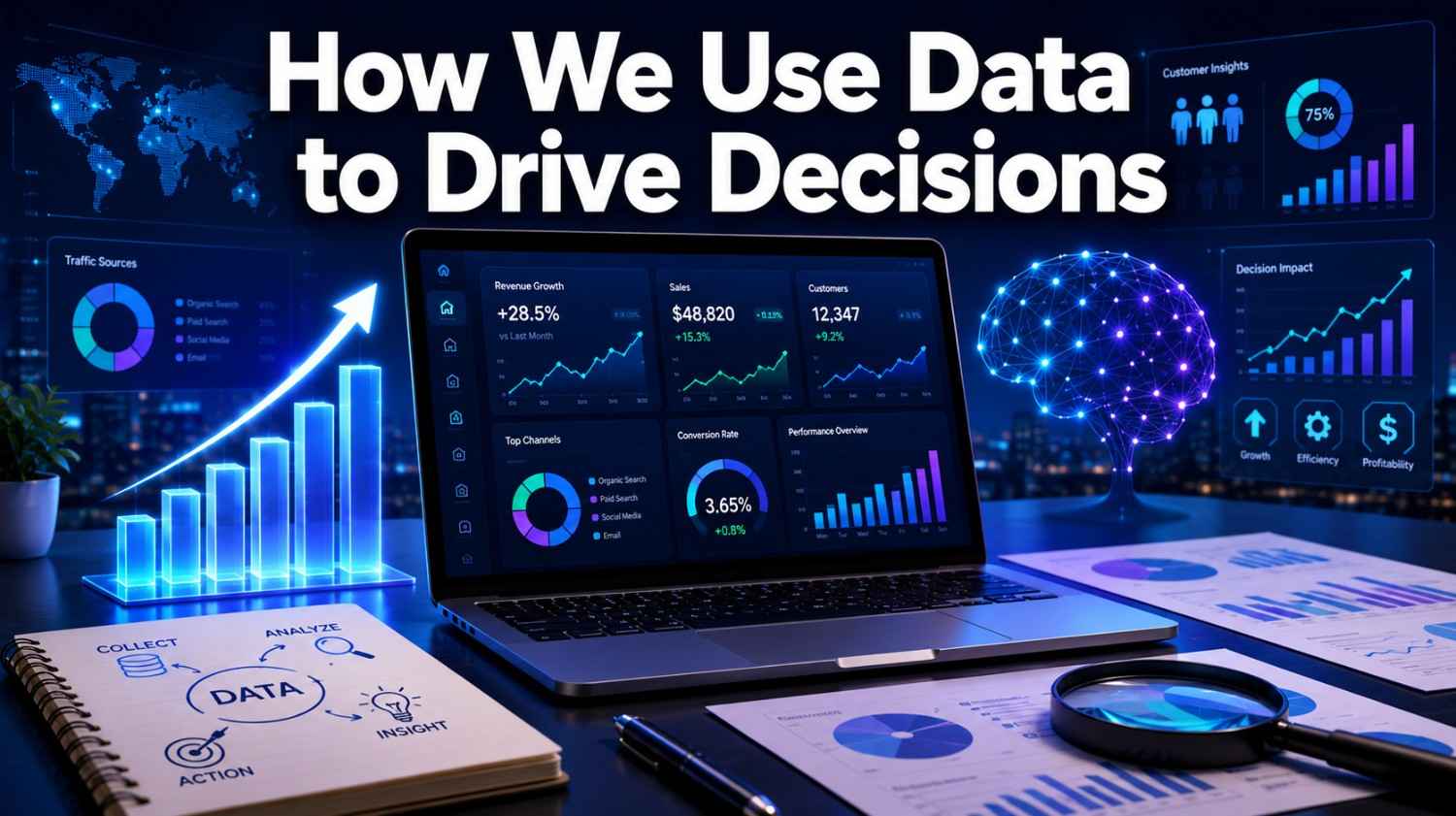
How We Use Data to Drive Decisions
In today’s digital marketplace, data has become one of the most valuable assets for any business. Every customer search, product click, purchase, and review creates useful information that helps companies understand what works and what needs improvement. Instead of relying on assumptions or outdated methods, successful eCommerce brands now make decisions based on measurable insights. This approach not only reduces risks but also improves efficiency, customer satisfaction, and long-term profitability.
For businesses selling on Amazon and other online marketplaces, data-driven decision-making is no longer optional. It is an essential part of staying competitive in an environment where customer expectations and marketplace algorithms change constantly. By analyzing the right information, businesses can make confident decisions that lead to sustainable growth.
Why Data Matters More Than Ever
The eCommerce industry generates enormous amounts of information every day. From product impressions and keyword rankings to advertising performance and customer feedback, every metric tells a story. Businesses that learn how to interpret this information gain a significant advantage over competitors who rely on guesswork.
Data helps answer important business questions. Which products are attracting customers? Which keywords generate the highest conversions? Which advertising campaigns produce the best return on investment? Instead of making costly assumptions, businesses can use accurate information to make informed decisions that support both short-term sales and long-term growth.
Search engines and AI-powered search platforms also reward businesses that consistently provide relevant, high-quality content and excellent customer experiences. A data-first strategy supports better SEO, GEO, and AEO performance by helping brands understand what users are searching for and how they interact with products online.
Understanding Customer Behavior
Every customer leaves behind valuable insights during their buying journey. The pages they visit, the products they compare, the keywords they search, and the reviews they leave all contribute to a better understanding of consumer behavior.
Businesses that study these patterns can identify changing customer preferences and respond quickly. They can improve product descriptions, update images, adjust pricing strategies, and refine marketing campaigns based on actual customer actions rather than assumptions.
Understanding customer intent also helps businesses create more relevant product listings and content that answer shoppers’ questions before they even ask them. This improves user experience while increasing the likelihood of conversions.
Improving Product Listings Through Analytics
Product listings play a critical role in online sales. Even small improvements in titles, images, keywords, or descriptions can significantly impact visibility and conversion rates.
By monitoring listing performance, businesses can identify which products perform well and which require optimization. Data reveals whether customers are finding a listing through organic search, paid advertising, or external traffic sources. It also highlights where customers lose interest during the buying process.
Instead of making random updates, businesses can focus on changes supported by measurable performance data. This approach leads to stronger search rankings, higher click-through rates, and better overall sales performance.
Smarter Marketing Decisions
Digital marketing becomes far more effective when supported by analytics. Every advertising campaign generates performance data that helps businesses understand where their budget delivers the highest return.
Rather than increasing advertising spend across every campaign, businesses can identify profitable keywords, successful audience segments, and high-converting products. They can pause underperforming campaigns while investing more heavily in strategies that consistently produce results.
This continuous process of measuring, learning, and optimizing reduces unnecessary expenses while improving overall marketing efficiency.
Inventory Planning Based on Real Data
Inventory management is another area where data plays a vital role. Running out of stock can reduce marketplace rankings and disappoint customers, while excessive inventory increases storage costs and affects cash flow.
Sales trends and historical purchasing patterns help businesses forecast future demand more accurately. Seasonal buying behavior, regional preferences, and product performance all contribute to better inventory planning.
With reliable forecasting, businesses can maintain healthy stock levels, avoid unnecessary costs, and ensure products remain available when customers are ready to purchase.
Measuring Business Performance
Successful businesses regularly evaluate their progress using key performance indicators. These metrics provide a clear picture of overall business health and help identify opportunities for continuous improvement.
Rather than focusing only on sales, businesses also monitor customer engagement, conversion rates, repeat purchases, advertising efficiency, and customer satisfaction. Together, these measurements provide a complete understanding of business performance.
Regular reporting allows decision-makers to recognize trends early and make adjustments before small issues become major problems.
Building a Culture of Continuous Improvement
Data-driven businesses understand that improvement is an ongoing process rather than a one-time project. Marketplace conditions change frequently, customer expectations evolve, and new competitors enter the market every day.
Organizations that consistently review their analytics remain flexible and responsive. They test new ideas, evaluate results objectively, and refine their strategies based on evidence rather than opinions.
This culture of continuous improvement creates stronger businesses that can adapt quickly to changing market conditions while maintaining steady growth.
The Future Belongs to Data-Driven Businesses
Artificial intelligence, machine learning, and advanced analytics are transforming the future of eCommerce. Businesses now have access to more information than ever before, allowing them to predict customer demand, personalize shopping experiences, and improve operational efficiency.
Companies that embrace data-driven decision-making are better positioned to identify emerging opportunities before competitors. They make faster decisions, reduce operational risks, and deliver better experiences for customers.
As search engines continue evolving toward AI-powered results and answer-based search experiences, businesses that organize, analyze, and apply their data effectively will remain ahead of the competition.
Why Businesses Choose AMZ Northland
Turning large amounts of marketplace data into meaningful business strategies requires experience, technology, and continuous monitoring. AMZ Northland helps brands make informed decisions by analyzing customer behavior, keyword performance, listing effectiveness, advertising results, and marketplace trends. Instead of relying on assumptions, our team develops data-driven strategies that improve visibility, increase conversions, and support sustainable growth for businesses selling across Amazon and other leading eCommerce platforms.
Recent Posts
- Pricing for Profit: Setting Margins and Minimum Order Quantities for Wholesale Buyers
- Mobile-First Storefronts: Designing Seamless Experiences for Smartphone Shoppers
- The Content Advantage: How Rich Media Content Drives Repeat Customer Loyalty
- The Zero-Error Checklist: Preventing Common Operational Mishaps During Product Releases
- The First 30 Days: Engineering Momentum for a New Product Launch
- Writing Copy That Sells: Overcoming Friction Points in Product Descriptions
- The High-Converting Shopify Product Page: Anatomy of a Seamless Checkout Flow
- Google SEO vs. Marketplace SEO: Why Winning on Google Doesn’t Mean Winning on Amazon
- The 2026 E-Commerce Landscape: Decentralization, AI Agents, and Unified Feeds
Archives
- September 2026 (16)
- August 2026 (24)
- July 2026 (26)
- June 2026 (26)
- May 2026 (26)
- April 2026 (11)
- October 2025 (4)
- September 2025 (5)
Frequently Asked Questions
It is the process of using business data and analytics to make informed decisions instead of relying on assumptions or guesswork.
Data helps businesses understand customer behavior, improve marketing performance, optimize product listings, and increase overall profitability.
It identifies high-performing keywords, improves listings, optimizes advertising campaigns, and helps businesses make smarter inventory decisions.
Businesses should monitor conversion rates, keyword rankings, advertising performance, customer reviews, inventory trends, and overall sales growth.
Yes. Even small businesses can use analytics to improve customer experiences, reduce unnecessary costs, and make better marketing decisions.
Most successful businesses review important metrics weekly while conducting detailed performance analysis every month.
AMZ Northland provides expert marketplace analysis, listing optimization, keyword research, advertising insights, and performance reporting to help businesses make smarter decisions and achieve long-term eCommerce success.
Recent Comments