
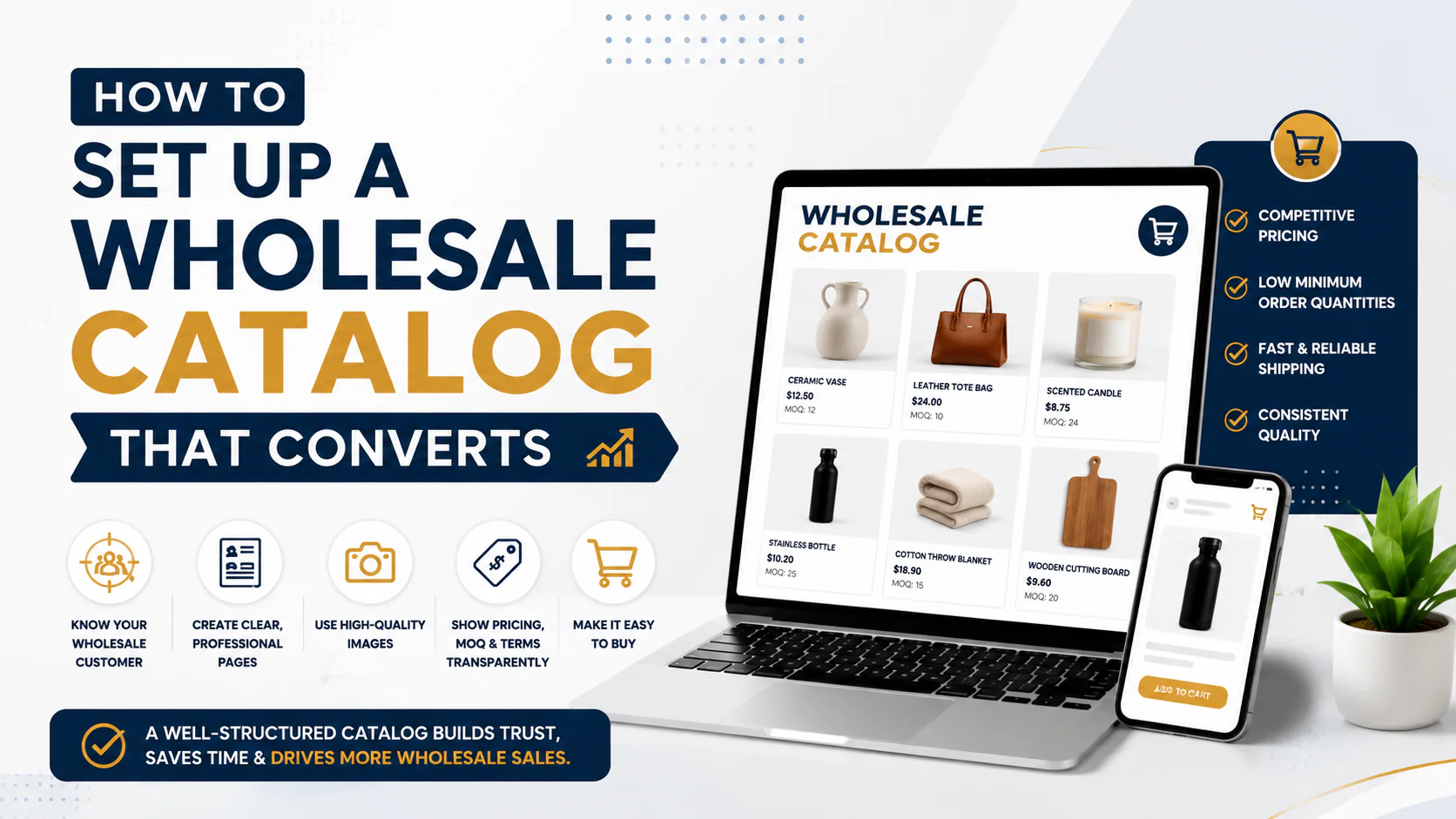
How to Set Up a Wholesale Catalog That Converts
A wholesale catalog is more than just a product list. For many retailers, boutiques, and ecommerce buyers, your catalog creates the first impression of your business.
A poorly organized catalog can confuse buyers and reduce trust, while a professionally designed wholesale catalog can improve conversions, encourage larger orders, and strengthen your brand image.
In today’s competitive wholesale market, buyers expect catalogs that are:
• Easy to navigate
• Visually professional
• Informative
• Mobile-friendly
• Brand-focused
At AMZ Northland, we help wholesale and ecommerce businesses improve product presentation, branding, marketplace optimization, infographic design, and conversion-focused ecommerce strategies designed for modern online selling environments.
This guide explains how to create a wholesale catalog that not only looks professional but also helps generate more wholesale orders.
Why Wholesale Catalog Design Matters?
Wholesale buyers often review multiple suppliers before making purchasing decisions.
Your catalog directly influences:
• Brand perception
• Buyer trust
• Product understanding
• Order confidence
• Professional credibility
A cluttered or outdated catalog can make even good products appear less valuable.
On the other hand, a clean and well-structured catalog helps businesses appear more reliable and organized.
At AMZ Northland, we often see stronger buyer engagement when businesses improve catalog presentation and branding consistency.
Start With Clear Brand Identity
Your catalog should immediately communicate who you are as a brand.
This includes:
• Logo placement
• Brand colors
• Typography consistency
• Brand messaging
• Overall visual style
Strong branding helps buyers remember your business and creates a more professional appearance.
A Strong Catalog Brand Identity Helps
• Build trust
• Improve recognition
• Increase perceived value
• Create consistency across platforms
Wholesale buyers are more likely to work with brands that appear organized and established.
Organize Products into Clear Categories
One of the biggest catalog mistakes is poor product organization. Buyers should quickly find products without confusion.
Common Product Categories Include
• Tote Bags
• Crossbody Bags
• Wallets
• Travel Accessories
• Eco-Friendly Bags
• Seasonal Collections
Clear organization improves:
• Navigation
• Product discovery
• Buyer experience
• Catalog usability
At AMZ Northland, we recommend using category sections that match how retailers shop and browse products.
Use Professional Product Photography
Visual presentation strongly affects wholesale buying decisions.
High-quality product images help buyers understand:
• Product style
• Materials
• Features
• Size
• Quality
Effective Catalog Photography Usually Includes
• White-background product images
• Lifestyle visuals
• Multiple product angles
• Close-up feature shots
• Consistent image styling
Professional visuals increase trust and improve perceived product value.
Poor photography can reduce conversion potential even if the products themselves are strong.
Add Clear Product Information
Wholesale buyers need quick access to important product details.
Each product should include:
• Product name
• Materials
• Dimensions
• Color options
• MOQ details
• Packaging information
• Wholesale pricing
Descriptions should remain:
• Clear
• Concise
• Easy to scan
Overly long descriptions can reduce readability.
At AMZ Northland, we focus on creating product content that balances clarity, branding, and conversion optimization.
Highlight Bestsellers and Trending Products
Retailers often look for products with strong sales potential.
Your catalog should clearly feature:
• Bestselling products
• New arrivals
• Seasonal collections
• Trend-focused items
This Helps Buyers
• Make faster decisions
• Identify popular products
• Understand current trends
Featured sections also improve catalog engagement and visual flow.
Make the Catalog Easy to Scan
Most buyers skim catalogs quickly before reviewing products in detail.
This means readability is extremely important.
High-Converting Catalogs Usually Include
• Short text sections
• Clear headings
• White space
• Organized layouts
• Consistent formatting
Large blocks of text can overwhelm buyers and reduce engagement.
Simple layouts usually perform better.
Use Lifestyle Images Strategically
Lifestyle images help retailers imagine how products will appeal to customers.
For example:
• Travel bags shown during travel
• Tote bags used while shopping
• Fashion accessories styled professionally
Lifestyle visuals create stronger emotional connection and improve product presentation.
At AMZ Northland, lifestyle-based visual strategies are commonly used to improve ecommerce and wholesale conversions.
Include Contact & Ordering Information Clearly
Many wholesale catalogs lose conversions because ordering information is difficult to find.
Your catalog should clearly explain:
• How to order
• Contact information
• Shipping details
• MOQ requirements
• Payment options
Making the ordering process simple improves buyer confidence and reduces friction.
Mobile-Friendly Catalogs Matter More Than Ever
Many buyers now browse catalogs using:
• Mobile phones
• Tablets
• Laptops
A mobile-friendly catalog improves:
• Readability
• Navigation
• Buyer experience
Mobile Optimization Best Practices
• Clean layouts
• Readable text sizes
• Optimized image sizes
• Easy scrolling structure
At AMZ Northland, mobile usability is an important part of catalog optimization strategies.
Digital Catalogs Perform Better in Modern Ecommerce
Traditional printed catalogs still have value, but digital catalogs now offer:
• Faster updates
• Easier sharing
• Better accessibility
• Online integration
• SEO opportunities
Digital catalogs can also support:
• Ecommerce growth
• Marketplace visibility
• Brand discoverability
Businesses increasingly combine digital catalogs with ecommerce and marketplace strategies.
Common Wholesale Catalog Mistakes
Many businesses reduce conversions by:
• Using low-quality images
• Overcrowding pages
• Creating inconsistent branding
• Adding excessive text
• Ignoring mobile usability
• Hiding pricing details
• Using outdated designs
Modern buyers expect catalogs that feel professional, simple, and easy to navigate.
AI & Ecommerce Are Influencing Product Presentation
Modern ecommerce platforms increasingly reward:
• Structured information
• Professional visuals
• User-friendly design
• Organized content
• Brand consistency
AI-driven systems analyze customer engagement and user experience more than ever before.
This makes strong product presentation increasingly important across ecommerce and wholesale platforms.
What Successful Wholesale Brands Do Differently
Top-performing wholesale brands usually focus on:
• Professional catalog design
• Strong branding
• Conversion-focused layouts
• Product clarity
• High-quality visuals
• Mobile optimization
They understand that product presentation directly affects buyer confidence and wholesale conversions.
At AMZ Northland, we help businesses improve wholesale catalogs, ecommerce branding, marketplace optimization, infographic product design, and conversion-focused growth strategies designed for modern online marketplaces.
What Businesses Should Focus On
A wholesale catalog should do more than display products — it should help buyers trust your brand, understand your products, and place orders confidently.
Businesses that focus on:
• Clean layouts
• Professional branding
• Product clarity
• High-quality visuals
• Mobile usability
• Organized structure
are more likely to improve wholesale conversions and long-term buyer relationships.
At AMZ Northland, we help ecommerce and wholesale businesses improve product presentation through catalog optimization, infographic product images, marketplace SEO, branding strategies, and conversion-focused ecommerce solutions.
Recent Posts
- Fast-Tracking Marketplace Approvals: Avoiding Common Pitfalls During Onboarding
- Navigating Marketplace Restrictions: Staying Compliant Without Sacrificing Visual Appeal
- Lighting, Angles, and Conversion: Technical Product Photography Standards That Win
- The Mechanics of Cost-Per-Click: Understanding How Ad Auctions Actually Function
- Structuring Campaigns for Success: The Blueprint for Clean Ad Architecture
- Recession-Proof E-Commerce: Diversification Strategies for Volatile Markets
- Crossing the Border: Navigating Customs, Tariffs, and Fulfillment from Canada to the USA
- Scaling DTC Brands: When to Bring SEO and Paid Media In-House vs. Outsourcing
- Hiring Your First E-Commerce Agency: Red Flags, Green Flags, and ROI Expectations
Archives
- October 2026 (2)
- September 2026 (24)
- August 2026 (24)
- July 2026 (26)
- June 2026 (26)
- May 2026 (26)
- April 2026 (11)
- October 2025 (4)
- September 2025 (5)
Frequently Asked Questions
A wholesale catalog is a product presentation document or digital collection used to showcase products to wholesale buyers and retailers.
Professional catalog design improves buyer trust, product understanding, and conversion potential.
Product images, descriptions, pricing, MOQ details, contact information, and organized categories are important.
High-quality visuals improve perceived product value and help buyers understand products better.
Clear layouts, strong branding, mobile optimization, and organized product presentation help improve conversions.
Digital catalogs are easier to update, share, optimize, and integrate with ecommerce strategies.
Many buyers browse catalogs on mobile devices, making readability and navigation important.
Recent Comments