
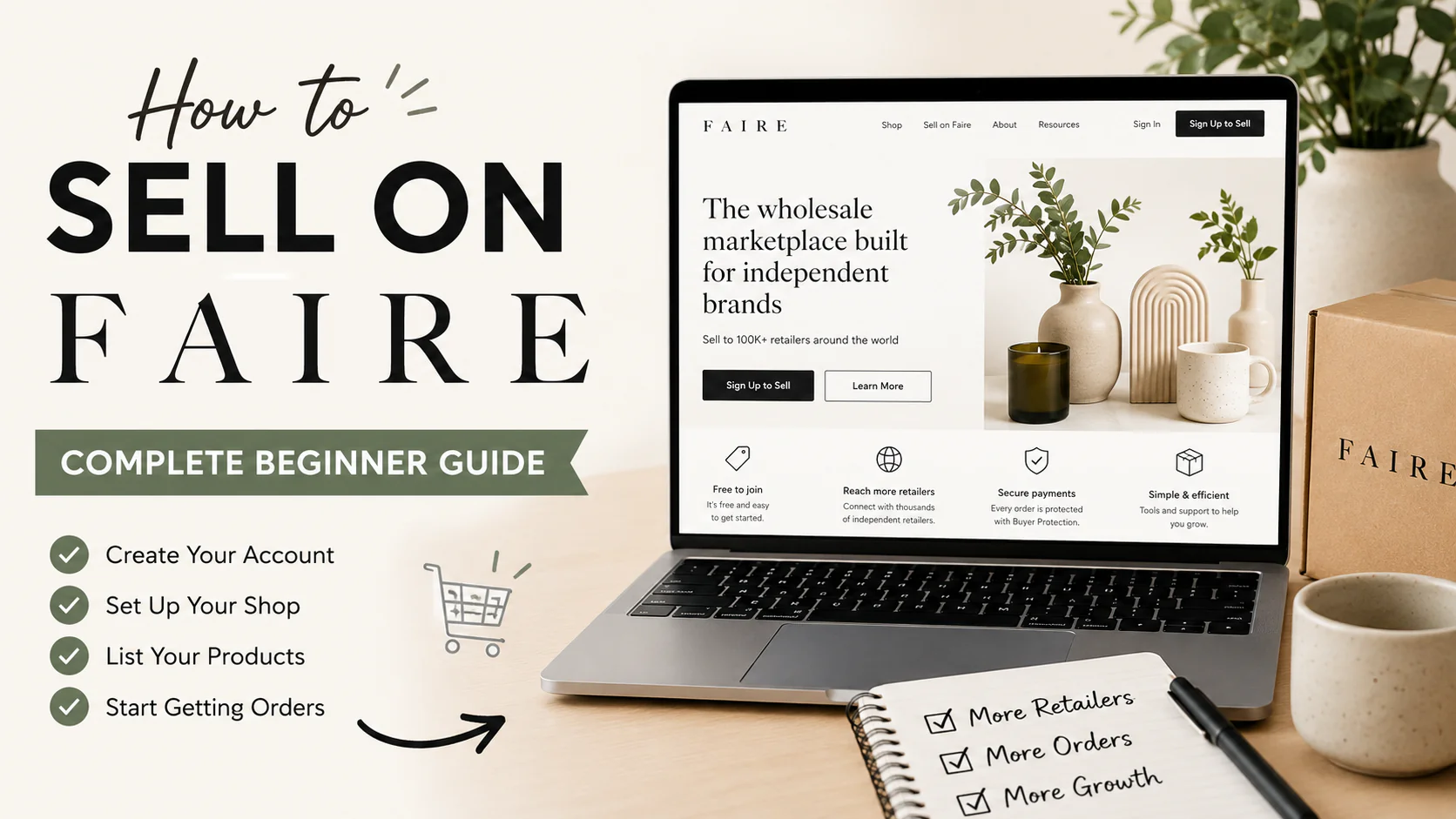
How to Sell on Faire: Complete Beginner Guide
Wholesale marketplaces are changing how brands connect with retailers. Instead of relying only on trade shows or direct outreach, many businesses now use online wholesale platforms to grow faster and reach boutique buyers across different regions.
One of the fastest-growing wholesale marketplaces is Faire.
Faire allows brands to sell products directly to boutiques, gift shops, lifestyle stores, and independent retailers across the USA and Canada. For small and growing brands, it creates opportunities to expand wholesale operations without building a large sales team.
However, success on Faire requires more than simply uploading products. Sellers must focus on branding, product presentation, pricing strategy, and wholesale optimization to stand out in competitive categories.
At AMZ Northland, we help ecommerce and wholesale brands improve product presentation, marketplace optimization, branding, SEO, and ecommerce growth strategies for modern online marketplaces.
This beginner guide explains how to start selling on Faire and what businesses should focus on for long-term success.
What Is Faire?
Faire is an online wholesale marketplace that connects brands with independent retailers.
Retailers use Faire to discover products across categories such as:
- • Fashion accessories
- • Handbags
- • Jewelry
- • Home décor
- • Beauty products
- • Gift items
- • Lifestyle products
Instead of traditional B2B selling methods, Faire simplifies wholesale ordering through an ecommerce-style platform.
This makes it easier for smaller brands to access wholesale buyers.
Why Many Brands Are Joining Faire
Wholesale ecommerce is growing rapidly, especially among independent retailers looking for unique products.
Many businesses join Faire because it offers:
- • Access to boutique buyers
- • Easier wholesale management
- • Online product discovery
- • Lower entry barriers
- • Retailer-focused marketplace traffic
For brands without large sales teams, Faire provides an opportunity to scale wholesale visibility online.
At AMZ Northland, we are seeing increasing interest from ecommerce brands expanding into wholesale marketplaces like Faire alongside Amazon and Shopify.
Step 1: Create a Professional Brand Profile
Your Faire storefront acts as your wholesale brand identity.
Retailers often evaluate:
- • Brand presentation
- • Product quality
- • Photography
- • Product descriptions
- • Store consistency
A professional storefront helps build trust with wholesale buyers.
Strong Faire Profiles Usually Include
- • Clear brand story
- • Professional logo
- • High-quality images
- • Organized collections
- • Consistent branding
Brands that appear polished and trustworthy often attract more retailer attention.
Step 2: Choose the Right Products
Not every product performs equally well in wholesale marketplaces.
Successful Faire sellers often focus on products that:
- • Have strong visual appeal
- • Offer retailer margins
- • Support repeat purchasing
- • Fit boutique trends
- • Have manageable shipping costs
For fashion and accessories, retailers often prefer:
- • Trend-focused items
- • Functional products
- • Giftable products
- • Seasonal collections
At AMZ Northland, we often recommend building collections that combine strong visuals with practical retail demand.
Step 3: Use Professional Product Photography
Wholesale buyers cannot physically inspect products online. Because of this, visuals become extremely important.
High-Converting Faire Listings Usually Include
- • White-background images
- • Lifestyle photography
- • Multiple angles
- • Packaging visuals
- • Size reference images
Professional photography improves:
- • Buyer confidence
- • Product understanding
- • Brand perception
- • Conversion rates
Poor visuals can reduce retailer trust quickly.
Step 4: Write Clear Wholesale Product Descriptions
Wholesale buyers want product information quickly and clearly.
Descriptions should explain:
- • Product materials
- • Features
- • Usage
- • Dimensions
- • Retail appeal
- • Target audience
Avoid overly generic descriptions.
Retailers prefer listings that clearly explain why products will sell well in stores.
Good Product Descriptions Help
- • Improve product understanding
- • Increase buyer confidence
- • Reduce confusion
- • Support purchasing decisions
At AMZ Northland, we focus heavily on conversion-focused product descriptions for ecommerce and wholesale marketplaces.
Step 5: Set Smart Wholesale Pricing
Pricing is one of the most important parts of wholesale selling. Retailers need enough margin to resell products profitably.
When setting pricing, businesses should consider:
- Product cost
- Shipping expenses
- Marketplace fees
- Retail markup expectations
- Profit margins
Pricing products too high may reduce wholesale interest, while pricing too low can hurt long-term profitability.
Step 6: Build Retailer Trust
Independent retailers prefer reliable suppliers. Trust becomes extremely important in wholesale marketplaces.
Brands can improve trust through:
- • Fast communication
- • Professional branding
- • Accurate product information
- • Reliable shipping
- • Consistent product quality
Positive retailer experiences often lead to:
- • Repeat orders
- • Larger wholesale purchases
- • Long-term relationships
Step 7: Optimize for Search Within Faire
Like Amazon and Shopify, Faire also relies on search visibility. Optimized listings improve discoverability inside the platform.
Important Optimization Areas Include
- • Product titles
- • Keywords
- • Product categories
- • Collection organization
- • Product descriptions
Search-friendly product listings help retailers discover products more easily.
At AMZ Northland, marketplace SEO optimization is a key part of ecommerce and wholesale growth strategies.
Step 8: Focus on Brand Consistency
Strong branding helps businesses stand out in crowded marketplaces.
Consistent branding includes:
- Visual style
- Product presentation
- Packaging
- Photography style
- Brand messaging
Retailers are more likely to remember brands that maintain professional consistency.
In competitive wholesale environments, branding often influences purchasing decisions.
Step 9: Manage Inventory Carefully
Wholesale businesses must balance inventory carefully.
Overstocking can create:
- • Cash flow pressure
- • Slow-moving inventory
- • Storage costs
Understocking may lead to:
- • Missed opportunities
- • Delayed shipments
- • Retailer dissatisfaction
Successful brands usually monitor:
- • Product demand
- • Seasonal trends
- • Inventory turnover
- • Bestseller performance
Inventory management plays a major role in wholesale growth.
Common Mistakes New Faire Sellers Make
Many new sellers struggle because they:
- • Use weak product images
- • Ignore branding
- • Set poor wholesale pricing
- • Upload generic descriptions
- • Lack product differentiation
- • Fail to optimize listings
Wholesale marketplaces are becoming more competitive, so professional presentation matters more than ever.
AI & Ecommerce Are Changing Wholesale Marketplaces
Modern ecommerce platforms increasingly analyze:
- • Customer engagement
- • Product quality signals
- • Visual presentation
- • Search relevance
- • User experience
AI-driven discovery systems reward:
- • Structured content
- • Clear product information
- • Professional visuals
- • Strong branding
This makes optimized marketplace listings increasingly important for long-term growth.
What Successful Faire Brands Do Differently
Top-performing Faire sellers usually focus on:
- • Professional branding
- • Strong visuals
- • Product differentiation
- • Retail-friendly pricing
- • Search optimization
- • Consistent customer experience
They treat wholesale marketplaces as long-term brand-building opportunities instead of only short-term sales channels.
At AMZ Northland, we help ecommerce and wholesale businesses improve marketplace visibility, branding, SEO, product presentation, and conversion-focused growth strategies designed for modern online selling platforms.
What Businesses Should Focus On
Selling successfully on Faire requires more than simply listing products online. Businesses must combine:
- • Professional branding
- • Marketplace optimization
- • Strong visuals
- • Retail-focused product selection
- • Clear descriptions
- • Wholesale pricing strategy
As online wholesale marketplaces continue growing, brands that invest in professional ecommerce presentation and optimization are more likely to achieve sustainable long-term growth.
At AMZ Northland, we help businesses improve ecommerce performance through marketplace SEO, product listing optimization, infographic product images, branding strategies, and conversion-focused ecommerce solutions.
Recent Posts
- Fast-Tracking Marketplace Approvals: Avoiding Common Pitfalls During Onboarding
- Navigating Marketplace Restrictions: Staying Compliant Without Sacrificing Visual Appeal
- Lighting, Angles, and Conversion: Technical Product Photography Standards That Win
- The Mechanics of Cost-Per-Click: Understanding How Ad Auctions Actually Function
- Structuring Campaigns for Success: The Blueprint for Clean Ad Architecture
- Recession-Proof E-Commerce: Diversification Strategies for Volatile Markets
- Crossing the Border: Navigating Customs, Tariffs, and Fulfillment from Canada to the USA
- Scaling DTC Brands: When to Bring SEO and Paid Media In-House vs. Outsourcing
- Hiring Your First E-Commerce Agency: Red Flags, Green Flags, and ROI Expectations
Archives
- October 2026 (2)
- September 2026 (24)
- August 2026 (24)
- July 2026 (26)
- June 2026 (26)
- May 2026 (26)
- April 2026 (11)
- October 2025 (4)
- September 2025 (5)
Frequently Asked Questions
Faire is an online wholesale marketplace that connects brands with independent retailers and boutiques.
Faire helps brands reach wholesale buyers without relying only on traditional sales methods.
Fashion accessories, gift items, handbags, home décor, beauty products, and boutique-focused products often perform well.
Professional branding helps build trust and improves retailer confidence.
High-quality visuals improve product understanding, buyer trust, and conversion rates.
Pricing should balance profitability, retailer margins, marketplace fees, and shipping costs.
Yes. Optimized product titles, keywords, and descriptions can improve marketplace discoverability.
Recent Comments