
5 Ways to Improve Conversion Rates

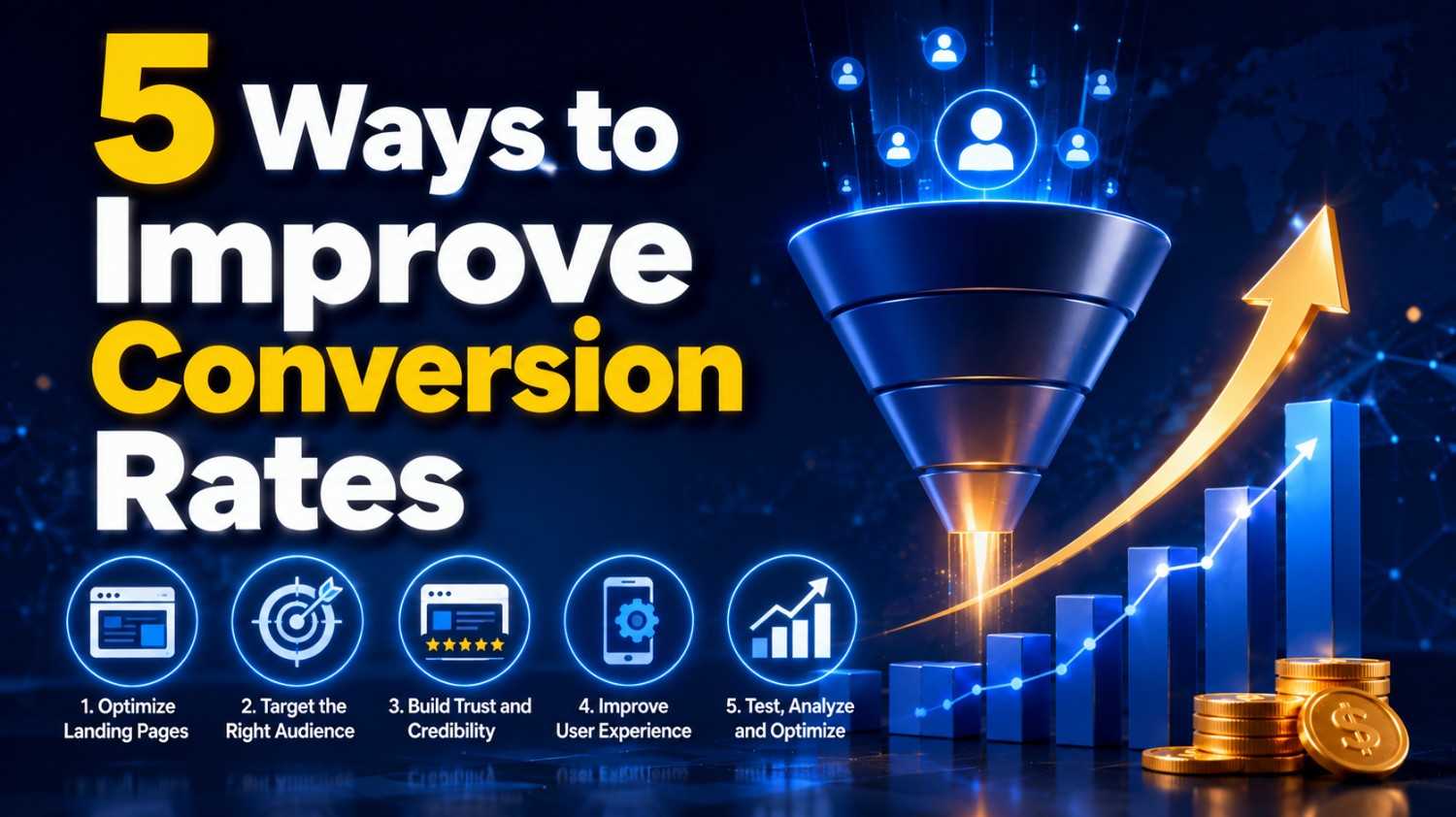
5 Ways to Improve Conversion Rates

5 Ways to Improve Conversion Rates


Driving traffic to your ecommerce store is only half the battle. The real measure of success is how many visitors become paying customers. A high conversion rate means your website, product pages, and customer experience are working together to encourage purchases. On the other hand, a low conversion rate often indicates that potential buyers are leaving before completing their journey.


In today’s competitive ecommerce landscape, businesses need more than attractive products to succeed. They must deliver an exceptional shopping experience while optimizing their websites for traditional search engines, AI-powered search platforms, and answer engines. By combining SEO, Generative Engine Optimization (GEO), and Answer Engine Optimization (AEO), businesses can attract qualified visitors and convert them into loyal customers.


Here are five proven ways to improve your ecommerce conversion rates.


1.Create Clear and Compelling Product Pages

Product pages are often the deciding factor in whether a customer completes a purchase. Every page should provide accurate, engaging, and informative content that answers common buyer questions.


Write detailed product descriptions that focus on benefits rather than simply listing features. Use high-quality images from multiple angles, include specifications, and provide sizing or usage information where applicable. Customers should have all the information they need to make confident purchasing decisions without leaving the page.


Optimized product pages also improve search visibility, making it easier for potential customers to discover your products through both traditional search engines and AI-powered search platforms.


2.Improve Website Speed and User Experience

Online shoppers expect websites to load quickly. Even a few seconds of delay can increase bounce rates and reduce conversions.


A fast, responsive website improves customer satisfaction and encourages visitors to explore additional products. Ensure that navigation is simple, pages load efficiently, and the checkout process is easy to complete on both desktop and mobile devices.


User experience also includes readable layouts, consistent branding, secure payment options, and intuitive site structure. These elements create trust and reduce friction throughout the buying journey.


3.Build Trust with Customers

Trust plays a significant role in ecommerce conversions. Before making a purchase, customers want reassurance that they are buying from a reliable business.


Display customer reviews, testimonials, secure payment badges, return policies, shipping information, and contact details clearly across your website. Transparent communication helps reduce uncertainty and builds confidence.


Providing detailed FAQs and answering common customer questions also improves AEO by making your content more useful for AI-generated answers and voice search.


When customers trust your business, they are more likely to complete purchases and return for future orders.


4.Optimize Content for SEO, GEO, and AEO

Modern ecommerce optimization goes beyond traditional keyword research. Search engines, AI assistants, and conversational search platforms all evaluate content differently.


SEO helps improve visibility in search engine results through optimized keywords, metadata, and structured content.


GEO ensures your content is understandable to AI-powered search systems that generate recommendations and summaries.


AEO focuses on directly answering customer questions using clear, conversational language, increasing the likelihood of appearing in featured snippets and AI-generated responses.


Creating informative blogs, detailed product pages, buying guides, and well-structured FAQs improves visibility across all these search environments while attracting highly qualified visitors.


5.Monitor Data and Continuously Improve

Successful ecommerce businesses never stop optimizing. Customer behavior, search trends, and marketplace algorithms change constantly, making continuous improvement essential.


Regularly review metrics such as conversion rates, bounce rates, average order value, cart abandonment, customer engagement, and sales performance. These insights help identify opportunities to improve user experience and remove barriers to conversion.


Testing different headlines, product images, calls to action, pricing strategies, and checkout processes allows businesses to discover what resonates best with their audience.


Small improvements made consistently can lead to significant increases in conversions over time.


Why Conversion Optimization Matters

Increasing traffic without improving conversions often results in higher marketing costs and lower profitability. Conversion rate optimization ensures businesses maximize the value of every visitor by creating a shopping experience that encourages purchases.


Businesses that focus on customer needs, website performance, valuable content, and continuous optimization are more likely to achieve sustainable ecommerce growth.


By combining technical improvements with customer-focused strategies, companies can strengthen brand loyalty, increase repeat purchases, and improve long-term business performance.


Conclusion

Improving conversion rates requires more than attracting visitors—it requires understanding customer behavior and delivering a seamless shopping experience from the first click to the final purchase. High-quality product pages, fast website performance, trust-building content, modern search optimization, and ongoing analysis all contribute to stronger ecommerce results.


At AMZ Northland, we help ecommerce businesses increase conversions through marketplace optimization, SEO-driven content strategies, AI-ready GEO and AEO optimization, performance analysis, and customized growth solutions. Our goal is to help brands turn more visitors into loyal customers while building sustainable success in today’s competitive digital marketplace.

Archives
Recent Comments

      Request a quote

      Frequently Asked Questions

      A good conversion rate varies by industry, but businesses should focus on continuous improvement rather than comparing themselves with averages.

      Detailed product pages provide customers with the information they need to make confident purchasing decisions, improving trust and reducing hesitation.

      Fast-loading websites create a better user experience, reduce bounce rates, and increase the likelihood of customers completing purchases.

      SEO attracts qualified visitors who are actively searching for relevant products, increasing the likelihood of conversions.

      GEO helps AI-powered search engines understand content, while AEO improves visibility by answering customer questions in conversational search and voice search.

      Monitoring performance data helps identify customer behavior, optimize user experience, and improve overall sales performance.

      AMZ Northland provides expert ecommerce consulting, marketplace optimization, conversion rate strategies, SEO, GEO, AEO optimization, and long-term growth solutions to help businesses maximize their online success.


      Why Sustainable Growth Beats Paid Ads

      Why Sustainable Growth Beats Paid Ads

      Why Sustainable Growth Beats Paid Ads


      Growing an ecommerce business is no longer about generating quick traffic or chasing short-term sales. While paid advertising can deliver immediate visibility, it often requires continuous investment to maintain results. As advertising costs increase and competition becomes more intense, many businesses are shifting their focus toward sustainable growth strategies that generate consistent results over time.


      Sustainable growth is built on creating long-term value rather than temporary spikes in traffic. It combines search engine optimization (SEO), Generative Engine Optimization (GEO), Answer Engine Optimization (AEO), quality content, customer trust, and data-driven improvements to establish a strong digital presence. Businesses that invest in these areas create lasting assets that continue driving traffic and conversions long after a paid campaign has ended.


      The Limitations of Paid Advertising

      Paid ads are an excellent way to introduce new products or increase visibility during promotions. However, they have one major limitation—results stop when the budget stops.


      Every click comes at a cost, and as more competitors enter the market, advertising expenses continue to rise. This makes it difficult for many businesses to maintain profitable campaigns over the long term.


      Paid advertising also provides limited control over long-term customer acquisition. While it can increase visibility, it does not automatically build trust, authority, or brand loyalty. Businesses that rely exclusively on advertising often experience inconsistent traffic and fluctuating sales.


      Sustainable Growth Creates Long-Term Value

      Unlike paid campaigns, sustainable growth focuses on building a strong online presence that continues to deliver results over time. Optimized product pages, informative blogs, helpful buying guides, and customer-focused content become valuable digital assets that attract visitors organically.


      Search engines reward businesses that consistently publish relevant, high-quality information. Well-optimized content can continue generating traffic months or even years after publication, creating a better return on investment than short-term advertising campaigns.


      This long-term strategy also reduces customer acquisition costs because businesses receive ongoing organic traffic without paying for every website visitor.


      SEO, GEO, and AEO Work Together

      The way customers search online has changed dramatically. Traditional keyword searches are now combined with AI-powered search engines, conversational search, and voice assistants.


      SEO remains essential for improving rankings in search engines and ecommerce marketplaces. GEO helps AI platforms understand and recommend content based on user intent, while AEO ensures your content answers common customer questions in a clear and structured format.


      When these three strategies work together, businesses increase their visibility across multiple digital channels instead of relying on a single source of traffic.

      This broader approach improves discoverability and prepares businesses for the future of online search.


      Customer Trust Matters More Than Clicks

      Traffic alone does not create a successful ecommerce business. Customers must trust your brand before making a purchase.


      Educational blogs, accurate product descriptions, comparison guides, customer reviews, and transparent policies all contribute to building credibility. These resources help customers make informed decisions while demonstrating your expertise.


      Unlike paid advertisements, valuable content continues to strengthen your reputation with every visitor. Over time, this trust leads to repeat purchases, referrals, and stronger customer loyalty.


      Adapting to an AI-Driven Marketplace

      Artificial intelligence is changing how people discover products online. AI assistants increasingly recommend products based on content quality, relevance, and customer intent instead of simply matching keywords.


      Businesses that create helpful, structured, and informative content are more likely to appear in AI-generated recommendations and answer engines.


      By optimizing content for both people and AI systems, ecommerce businesses can increase visibility across traditional search engines, conversational search platforms, and emerging technologies.


      Preparing for these changes today creates a competitive advantage for tomorrow.


      Measuring Sustainable Success

      Long-term growth should be measured using meaningful business metrics rather than short-term advertising performance.


      Organic traffic, customer engagement, repeat purchases, conversion rates, search visibility, customer lifetime value, and brand authority provide a more complete picture of business health.


      Monitoring these metrics helps businesses identify opportunities for improvement while making informed decisions based on real customer behavior rather than temporary advertising results.


      Consistent optimization ensures growth remains steady even as digital marketing trends continue to evolve.


      Conclusion

      Paid advertising has an important role in ecommerce, particularly for product launches and promotional campaigns. However, businesses seeking long-term success should prioritize sustainable growth built on SEO, GEO, AEO, valuable content, and exceptional customer experiences.


      At AMZ Northland, we help ecommerce businesses create growth strategies that extend beyond paid advertising. Through marketplace optimization, content development, keyword research, inventory planning, performance analysis, and ongoing ecommerce consulting, we help brands build stronger online visibility, improve customer engagement, and achieve sustainable success in today’s competitive digital marketplace.

      Archives
      Recent Comments

          Request a quote

          Frequently Asked Questions

          Sustainable growth focuses on long-term business success through organic traffic, customer trust, quality content, and continuous optimization rather than relying only on paid advertising.

          Yes. Paid ads are useful for generating immediate visibility, but they should complement a long-term organic growth strategy instead of replacing it.

          SEO improves organic search visibility, attracts qualified visitors, and creates long-lasting digital assets that continue generating traffic.

          GEO helps businesses optimize content so AI-powered search engines can understand, summarize, and recommend it more effectively.

          AEO improves the chances of appearing in AI-generated answers and voice search by providing clear, direct, and structured information.

          Yes. Strong organic visibility lowers dependence on paid advertising and reduces long-term customer acquisition expenses.

          AMZ Northland provides professional ecommerce consulting, marketplace optimization, SEO strategies, inventory management, and long-term growth solutions that help businesses build lasting success.

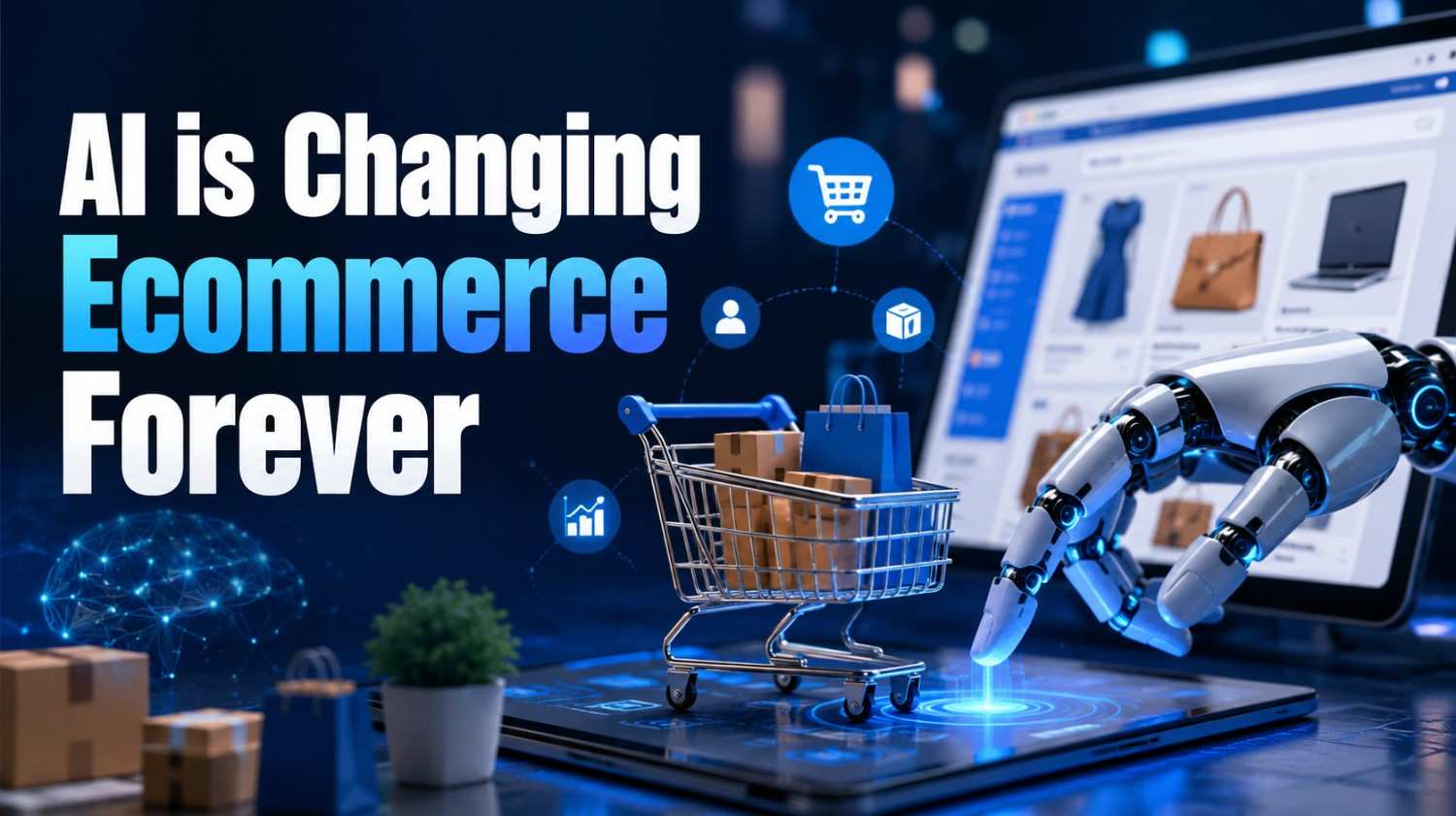
          AI Is Changing Ecommerce Forever

          AIisChangingEcommerceForeve

          AI Is Changing Ecommerce Forever


          Artificial Intelligence (AI) is no longer a futuristic concept—it has become an essential part of modern ecommerce. From personalized shopping experiences to intelligent inventory management and AI-powered search, businesses are embracing advanced technologies to remain competitive in an increasingly digital marketplace.


          As customer expectations continue to evolve, ecommerce companies must adapt quickly. Today’s buyers expect faster search results, personalized recommendations, accurate product information, and seamless shopping experiences across multiple platforms. AI is helping businesses meet these expectations while improving operational efficiency and increasing revenue opportunities.


          For online sellers, understanding how AI influences ecommerce is becoming just as important as product quality or pricing strategy. Businesses that successfully integrate AI into their operations are better positioned to improve customer satisfaction, strengthen marketplace performance, and achieve long-term growth.


          AI Is Transforming Product Discovery

          The way customers search for products has changed dramatically. Traditional keyword searches are increasingly being replaced by conversational queries, voice assistants, and AI-powered search experiences.


          Modern search engines and ecommerce marketplaces now analyze customer intent rather than relying solely on exact keyword matches. This means product listings must provide meaningful, informative, and well-structured content that answers customer questions naturally.


          Businesses should optimize product titles, descriptions, feature lists, and frequently asked questions to improve discoverability across traditional search engines as well as AI-driven platforms. Combining SEO, GEO (Generative Engine Optimization), and AEO (Answer Engine Optimization) ensures content remains visible as search technologies continue to evolve.


          Personalized Shopping Experiences

          One of AI’s greatest strengths is personalization. Instead of showing every customer the same products, AI analyzes browsing history, purchasing behavior, search activity, and preferences to recommend products that match individual interests.


          This personalized approach improves customer engagement while increasing conversion rates and average order values.


          Businesses that create informative product content supported by accurate data allow AI systems to deliver more relevant recommendations, benefiting both customers and sellers.

          Personalization also strengthens customer loyalty because shoppers are more likely to return when they receive experiences tailored to their needs.


          Smarter Inventory Management

          Managing inventory has always been one of the biggest challenges in ecommerce. Overstocking increases storage costs, while understocking leads to missed sales opportunities and dissatisfied customers.


          AI helps businesses forecast demand more accurately by analyzing historical sales, seasonal trends, customer behavior, and marketplace activity. These insights allow companies to maintain appropriate inventory levels while reducing unnecessary expenses.


          Predictive analytics also enables businesses to respond quickly to market changes, helping prevent stock shortages during periods of high demand.


          Better Customer Support

          AI-powered chatbots and virtual assistants are transforming customer service across ecommerce platforms.


          Customers now expect immediate responses to questions about products, shipping, returns, and order status. AI can answer common questions instantly while allowing support teams to focus on more complex customer needs.


          Well-structured product pages and informative FAQs also improve AI-generated responses, making it easier for customers to find accurate information without waiting for assistance.


          This faster support experience improves customer satisfaction while reducing operational workload.


          Data-Driven Decision Making

          Successful ecommerce businesses rely on data rather than assumptions. AI analyzes enormous amounts of information much faster than traditional methods, helping businesses identify trends, customer preferences, pricing opportunities, and advertising performance.


          Performance metrics such as click-through rates, conversion rates, inventory turnover, customer reviews, and sales patterns provide valuable insights that support smarter business decisions.


          Rather than reacting to problems after they occur, AI enables proactive optimization that improves long-term marketplace performance.


          Why SEO, GEO, and AEO Matter More Than Ever

          Artificial intelligence has changed how search engines understand and display content. Businesses must now optimize for multiple search environments instead of relying solely on traditional SEO.


          SEO continues to improve visibility in search engines and ecommerce marketplaces.


          GEO helps AI-powered search platforms understand, summarize, and recommend product content more effectively.


          AEO ensures product information answers customer questions clearly, increasing the likelihood of appearing in conversational search, voice assistants, and AI-generated responses.


          Together, these strategies help businesses remain competitive as AI continues reshaping digital commerce.


          Preparing for the Future of Ecommerce

          AI technology will continue evolving rapidly. Businesses that embrace innovation, continuously optimize their content, and invest in customer-focused experiences will have significant advantages over competitors that rely on outdated strategies.


          Future ecommerce success will depend on combining intelligent automation with human expertise. Businesses should focus on creating accurate, trustworthy, and engaging product information while using AI to improve efficiency and customer satisfaction.


          Those who adapt early will be better positioned to capitalize on new opportunities as AI becomes increasingly integrated into every stage of the online shopping journey.


          Conclusion

          Artificial Intelligence is transforming every aspect of ecommerce—from product discovery and customer service to inventory management and search optimization. Businesses that embrace AI while implementing strong SEO, GEO, and AEO strategies can improve visibility, enhance customer experiences, and build sustainable long-term growth.


          At AMZ Northland, we help ecommerce businesses navigate these changes with customized marketplace strategies, AI-ready content optimization, inventory planning, product listing improvements, and data-driven consulting. Our goal is to help brands adapt to the future of ecommerce while achieving measurable results in an increasingly competitive digital marketplace.

          Archives
          Recent Comments

              Request a quote

              Frequently Asked Questions

              AI improves product discovery, customer personalization, inventory forecasting, customer support, and business decision-making through intelligent automation and data analysis.

              AI helps businesses improve efficiency, enhance customer experiences, optimize marketing strategies, and increase sales opportunities.

              Generative Engine Optimization focuses on creating content that AI-powered search engines can easily understand, summarize, and recommend.

              Answer Engine Optimization improves visibility by providing clear answers that appear in AI-generated responses and voice search results.

              Yes. AI analyzes sales patterns, seasonal demand, and customer behavior to help businesses maintain optimal inventory levels.

              Absolutely. SEO remains essential for improving visibility in search engines and ecommerce marketplaces while working alongside GEO and AEO strategies.

              AMZ Northland provides expert ecommerce consulting, AI-ready marketplace optimization, Amazon growth strategies, inventory planning, and performance analysis to help businesses achieve sustainable long-term success.

              Celebrating 500+ Successful Product Launches!

              Celebrating 500 Successful Product Launches

              Celebrating 500+ Successful Product Launches!


              Launching a product in today’s ecommerce marketplace is about much more than making it available for purchase. Success requires careful planning, strategic optimization, market research, and continuous performance improvements. Every product launch presents an opportunity to build brand awareness, attract new customers, and create long-term business growth.


              Reaching the milestone of 500+ successful product launches reflects the importance of having a structured launch strategy backed by marketplace expertise and data-driven decision-making. Each successful launch represents careful preparation, effective optimization, and a commitment to helping businesses achieve measurable results in highly competitive online marketplaces.


              As ecommerce continues to evolve, businesses must adopt modern SEO, GEO (Generative Engine Optimization), and AEO (Answer Engine Optimization) practices to maximize product visibility and customer engagement from day one.


              Building a Strong Foundation Before Launch

              Every successful product launch begins long before the product becomes available online. Preparation is one of the most important factors influencing long-term marketplace performance.


              A comprehensive launch strategy starts with market research, competitor analysis, audience identification, and keyword planning.


              Understanding customer needs allows businesses to position products more effectively while identifying opportunities that competitors may have overlooked.


              Preparing optimized product listings, professional images, compelling descriptions, and accurate product information ensures shoppers receive a positive first impression. These elements also help marketplace algorithms understand the product and display it to relevant customers.


              The Importance of Marketplace Optimization

              Visibility plays a critical role in determining whether a new product succeeds or struggles. Even outstanding products require proper optimization to appear in search results and attract potential buyers.


              Effective product optimization includes keyword-focused titles, informative descriptions, high-quality product images, relevant backend search terms, and enhanced content that answers customer questions naturally.


              Rather than focusing only on traditional SEO, modern ecommerce businesses also optimize content for AI-powered search engines and conversational search experiences. GEO and AEO strategies make product information easier for artificial intelligence systems to understand, summarize, and recommend to potential customers.


              This broader optimization approach increases opportunities for customers to discover products through multiple search channels.


              Creating Customer Confidence

              Customers are more likely to purchase products when they have complete and accurate information. Successful launches focus not only on attracting visitors but also on building trust throughout the buying journey.


              Clear product descriptions, feature highlights, comparison content, usage instructions, and frequently asked questions help customers make informed purchasing decisions. Professional product images and consistent branding further improve credibility while reducing uncertainty.


              Providing an excellent customer experience from the beginning often results in stronger reviews, higher conversion rates, and improved marketplace rankings.


              Monitoring Performance After Launch

              A product launch is only the beginning of the optimization process. Continuous monitoring allows businesses to identify opportunities for improvement while responding quickly to customer behavior and marketplace changes.


              Important performance indicators include search rankings, click-through rates, conversion rates, advertising performance, inventory levels, customer reviews, and sales trends.


              Regular analysis helps businesses refine product listings, improve advertising campaigns, adjust pricing strategies, and optimize customer engagement over time.


              Businesses that consistently evaluate performance are better equipped to sustain growth after the initial launch period.


              Scaling Success Across Multiple Products

              One successful launch creates valuable insights for future products. Businesses that document performance data and customer feedback develop repeatable strategies that improve future launches.


              As organizations gain experience, launching additional products becomes more efficient because proven optimization techniques can be applied consistently across new product lines.


              This scalable approach enables brands to expand their catalogs while maintaining high-quality customer experiences and strong marketplace performance.


              Looking Ahead

              Ecommerce technology continues to evolve with artificial intelligence, voice search, predictive recommendations, and advanced marketplace algorithms shaping how customers discover products.


              Businesses that invest in SEO, GEO, and AEO strategies today will be better positioned for future growth. Creating informative, customer-focused content while continuously optimizing product listings helps brands remain competitive as digital commerce continues to change.


              Product launches will always be important milestones, but long-term success comes from ongoing improvement rather than one-time optimization.


              Conclusion

              Celebrating 500+ successful product launches represents more than a milestone—it reflects a commitment to strategic planning, continuous optimization, and measurable business growth. Every successful launch demonstrates the value of combining market research, customer-focused content, performance analysis, and modern ecommerce best practices.


              At AMZ Northland, we help businesses plan, optimize, and manage successful product launches with customized ecommerce strategies designed to improve marketplace visibility, strengthen customer engagement, and support sustainable long-term growth. Whether introducing a new product or expanding an existing catalog, our experienced team provides the expertise businesses need to launch with confidence and achieve lasting success.

              Archives
              Recent Comments

                  Request a quote

                  Frequently Asked Questions

                  A successful product launch combines market research, keyword optimization, high-quality listings, effective marketing, and continuous performance monitoring.

                  Keyword research helps businesses understand customer search behavior and optimize listings to improve visibility in marketplace search results.

                  SEO improves search visibility, GEO optimizes content for AI-powered search engines, and AEO helps products appear in conversational and answer-based search experiences.

                  Yes. Continuous optimization based on customer feedback, search trends, and marketplace performance helps maintain strong rankings and improve conversions.

                  Businesses should track search rankings, conversion rates, advertising performance, inventory levels, customer reviews, and overall sales performance.

                  A positive customer experience builds trust, encourages reviews, improves conversion rates, and supports stronger marketplace rankings.

                  AMZ Northland provides expert ecommerce consulting, product launch planning, marketplace optimization, performance analysis, and long-term growth strategies that help businesses maximize the success of every product launch.