
How to Write Product Titles That Convert

How to Write Product Titles That Convert

How to Write Product Titles That Convert


A product title is one of the most important elements of any ecommerce listing. Whether you sell on Amazon, Shopify, Walmart Marketplace, eBay, or your own online store, your product title is often the first thing potential customers see. Within just a few seconds, shoppers decide whether to click your listing or continue browsing.


An effective product title does much more than describe a product. It improves search visibility, communicates value, builds customer confidence, and encourages more clicks. In today’s competitive ecommerce environment, product titles also play an essential role in Search Engine Optimization (SEO), Answer Engine Optimization (AEO), and Generative Engine Optimization (GEO), helping products appear in traditional search engines as well as AI-powered search platforms.


This guide explains how to create high-converting product titles that attract more customers, improve rankings, and increase sales.


Why Product Titles Matter

Customers rarely purchase products without first reading the title. Search engines and ecommerce marketplaces also rely heavily on product titles to understand what you are selling.


A well-optimized product title helps:

•  Increase organic search visibility

•  Improve click-through rates (CTR)

•  Boost marketplace rankings

•  Improve customer understanding

•  Support AI-powered search results

•  Increase conversion rates


Even small improvements to a product title can lead to measurable increases in traffic and sales.


Understand Your Customer Before Writing

Before writing any product title, think about how customers search for products.


Most shoppers search using descriptive phrases rather than brand names alone.

For example, instead of searching:

“Backpack”


Customers may search:

•  Waterproof laptop backpack

•  Lightweight travel backpack

•  Business backpack for men

•  School backpack with USB charging port


Understanding customer intent allows you to create titles that closely match real search behavior.


Start with Your Primary Keyword

The primary keyword should appear naturally near the beginning of the title whenever possible.


Examples include:

•  Leather Laptop Bag

•  Stainless Steel Water Bottle

•  Wireless Bluetooth Earbuds

•  Cotton Canvas Tote Bag


Leading with the main keyword improves search visibility because ecommerce platforms and search engines place greater importance on words appearing early in the title.


Avoid keyword stuffing. The title should remain easy to read and informative.


Include Important Product Attributes

Customers want essential information immediately.


Depending on the product, include relevant details such as:

•  Brand

•  Product type

•  Material

•  Size

•  Color

•  Capacity

•  Quantity

•  Compatibility

•  Key feature


Example:

Premium Canvas Tote Bag – Reusable Grocery Shopping Bag with Reinforced Handles, Large Capacity

This title clearly explains what the product is while highlighting valuable features.


Focus on Customer Benefits

Features describe the product.

Benefits explain why customers should buy it.

Instead of simply saying:

“Stainless Steel Bottle”

Write:

“Insulated Stainless Steel Water Bottle Keeps Drinks Cold for 24 Hours”

Benefits create stronger emotional appeal and improve conversion rates.


Keep Titles Easy to Read

A product title should feel natural.

Avoid excessive punctuation such as:

!!! ### $$$

Similarly, avoid repeating keywords unnecessarily.

Poor example:

“Laptop Backpack Laptop Bag Business Backpack Travel Backpack Waterproof Backpack”

Better example:

“Waterproof Laptop Backpack for Business Travel with USB Charging Port”

Readable titles improve customer trust and encourage clicks.


Optimize for SEO, GEO, and AEO

Modern ecommerce optimization extends beyond traditional search engines.


A strong product title should help products appear in:

•  Google Search

•  Microsoft Bing

•  Amazon Search

•  Walmart Marketplace

•  ChatGPT recommendations

•  Microsoft Copilot

•  Google Gemini

•  AI-powered shopping assistants


To achieve this:

•  Use natural language

•  Include descriptive keywords

•  Match search intent

•  Avoid unnecessary repetition

•  Clearly describe the product


AI systems increasingly prefer content that is informative, accurate, and user-focused.


Avoid Misleading Claims

Some sellers exaggerate product capabilities to attract clicks.


Examples include:

•  Best in the World

•  Guaranteed Results

•  Number One Product


Unless these claims are supported by credible evidence, they can reduce customer trust and may violate marketplace policies.

Always ensure product titles accurately represent the item.


Write for Humans First

Search algorithms continue becoming smarter.

Instead of writing only for algorithms, focus on helping real customers understand the product.

Ask yourself:

Would I click this product if I were shopping online?

If the answer is yes, the title is likely on the right track.


Test and Improve Product Titles

Successful ecommerce businesses continuously optimize listings.


Monitor important performance indicators such as:

•  Click-through rate (CTR)

•  Conversion rate

•  Organic rankings

•  Search impressions

•  Sales performance

If a product receives many impressions but few clicks, the title may need improvement.

Small changes can produce significant increases in conversions.


Common Product Title Mistakes

Many sellers unintentionally reduce product visibility by making avoidable mistakes.


Common errors include:

•  Using vague descriptions

•  Keyword stuffing

Writing overly long titles

•  Omitting important features

•  Ignoring customer intent

•  Using unnecessary symbols

•  Including promotional language

•  Forgetting mobile readability

Avoiding these mistakes helps create professional listings that both customers and search engines appreciate.


Product Title Best Practices

When creating product titles, remember these principles:


Begin with the primary keyword, include important product details, keep the title readable, emphasize customer benefits, use natural language, optimize for SEO, GEO, and AEO, and regularly update titles based on customer behavior and marketplace trends.


Well-crafted titles not only increase visibility but also improve the overall shopping experience.


Final Thoughts

Your product title is one of the most influential elements of your ecommerce listing. It determines whether customers notice your product, understand its value, and decide to click. As search technology evolves, successful titles must satisfy both human shoppers and AI-powered search systems.


By combining clear language, relevant keywords, customer-focused benefits, and marketplace best practices, businesses can significantly improve search rankings, click-through rates, and sales performance. Investing time in writing better product titles is one of the simplest and most effective ways to strengthen your ecommerce strategy.


At AMZ Northland, we help businesses create high-converting Amazon listings through professional product title optimization, keyword research, catalog management, SEO, AEO, GEO strategies, A+ Content, and complete marketplace optimization. Whether you’re selling in Canada, the USA, or expanding globally, our team helps maximize product visibility, improve conversions, and drive sustainable ecommerce growth.

Archives
Recent Comments

      Request a quote

      Frequently Asked Questions

      Product titles help customers understand your product quickly while improving search visibility, click-through rates, and conversions.

      A good product title should include the primary keyword, product type, brand (if applicable), important features, and relevant attributes such as size or material.

      The ideal length depends on the marketplace, but titles should be descriptive, readable, and comply with platform-specific guidelines.

      Yes. Optimized product titles help search engines and ecommerce platforms better understand your product, improving organic visibility.

      SEO focuses on ranking in traditional search engines, while AEO helps products appear in AI-generated answers, voice search, and conversational search results.

      No. Repeating keywords excessively can reduce readability and may negatively affect both user experience and marketplace performance.

      Review product titles regularly based on performance data, keyword trends, customer search behavior, and marketplace updates to maintain strong visibility and conversions.


      Top Ecommerce Trends to Watch in 2026

      Top Ecommerce Trends to Watch in 2026

      Top Ecommerce Trends to Watch in 2026


      The ecommerce industry is evolving faster than ever. Consumer expectations continue to rise, artificial intelligence is becoming more advanced, and businesses are finding new ways to improve online shopping experiences. Companies that adapt to these changes early will have a significant advantage over competitors.


      Whether you sell on Amazon, Shopify, Walmart Marketplace, or your own ecommerce website, understanding the latest trends can help increase traffic, improve customer satisfaction, and boost sales. Businesses in Canada, the USA, and worldwide are investing in smarter technology, better customer experiences, and data-driven marketing to stay competitive.


      This guide explores the most important ecommerce trends businesses should watch in 2026 and explains how these innovations can help create sustainable long-term growth.


      Why Ecommerce Continues to Grow

      Online shopping is no longer simply an alternative to physical retail—it has become the preferred purchasing method for millions of consumers. Customers expect fast delivery, personalized recommendations, secure payment options, and seamless shopping experiences across multiple devices.


      Search engines and AI-powered search platforms are also changing how customers discover products. Businesses must optimize not only for traditional SEO but also for Answer Engine Optimization (AEO), Generative Engine Optimization (GEO), voice search, and AI assistants.


      Companies that combine excellent products with strong digital optimization are likely to outperform competitors throughout 2026.


      AI-Powered Shopping Experiences

      Artificial intelligence is transforming ecommerce from product discovery to customer support.


      AI can now:

      •  Recommend products based on shopping behavior

      •  Generate personalized product suggestions

      •  Improve search accuracy

      •  Create dynamic pricing strategies

      •  Power intelligent chatbots

      •  Predict future purchasing behavior

      Customers increasingly expect personalized experiences instead of generic online stores. AI helps businesses deliver exactly that while increasing conversion rates.


      Voice Search and Conversational Commerce

      More consumers are shopping using voice assistants and AI chat platforms.


      Instead of typing:

      “Wireless Bluetooth headphones”


      Customers now ask:

      “What’s the best noise-canceling headphone under $150?”


      This shift makes conversational content more valuable than traditional keyword stuffing.


      Businesses should create product descriptions and blogs that answer complete customer questions naturally. This improves visibility across Google Search, Microsoft Bing, ChatGPT, Copilot, Gemini, and other AI-powered search engines.


      Generative AI for Content Creation

      AI tools now help ecommerce brands create:

      •  Product descriptions

      •  Blog articles

      •  Email campaigns

      •  Social media content

      •  Advertising copy

      •  Customer support responses


      While AI improves efficiency, businesses should always review and refine AI-generated content to maintain originality, accuracy, and brand consistency.


      High-quality human-edited content continues to perform better for both search engines and customers.


      Hyper-Personalization

      Customers expect every shopping experience to feel unique.


      Modern ecommerce stores personalize:

      •  Homepage content

      •  Product recommendations

      •  Promotional offers

      •  Email marketing

      •  Loyalty rewards

      •  Shopping cart reminders


      Machine learning analyzes customer behavior to recommend products customers are actually interested in purchasing.


      This creates higher engagement and stronger customer retention.


      Faster Delivery and Smarter Logistics

      Delivery speed has become a major competitive advantage.


      Consumers increasingly expect:

      •  Same-day delivery

      •  Next-day shipping

      •  Real-time order tracking

      •  Flexible pickup options

      •  Easy returns

      Businesses are investing in warehouse automation, predictive inventory management, and regional fulfillment centers to reduce shipping times while controlling operational costs.


      Social Commerce Continues Growing

      Social media platforms are becoming complete shopping ecosystems.


      Consumers can now purchase products directly through:

      •  Instagram Shops

      •  Facebook Shops

      •  TikTok Shop

      •  Pinterest Shopping

      •  YouTube Shopping


      Influencer marketing also continues driving purchasing decisions, particularly among younger audiences.

      Successful brands combine engaging content with seamless shopping experiences across multiple social platforms.


      Mobile Commerce Dominates Online Sales

      Mobile devices generate a significant share of ecommerce traffic.

      In 2026, businesses must ensure:

      •  Fast-loading websites

      •  Responsive mobile design

      •  Simple checkout processes

      •  Mobile payment options

      •  Easy navigation

      Even a few seconds of loading delay can reduce conversions dramatically.


      Google also prioritizes mobile-friendly websites, making mobile optimization essential for SEO performance.


      Sustainable Ecommerce Practices

      Consumers increasingly support brands demonstrating environmental responsibility.


      Popular sustainability initiatives include:

      •  Eco-friendly packaging

      •  Carbon-neutral shipping

      •  Recyclable materials

      •  Ethical sourcing

      •  Transparent supply chains

      Sustainability is no longer simply a marketing message—it has become an important purchasing factor for many consumers.


      Better Data Privacy and Customer Trust

      Privacy regulations continue evolving across multiple countries.


      Customers now expect businesses to:

      •  Protect personal information

      •  Explain data collection clearly

      •  Offer secure payment methods

      •  Maintain transparent privacy policies


      Trust directly impacts conversions. Customers are far more likely to purchase from businesses that demonstrate strong security and transparency.


      GEO and AEO Become Essential

      Traditional SEO remains important, but ecommerce businesses must now optimize for AI-powered search experiences.


      Modern optimization includes:

      •  Search Engine Optimization (SEO)

      •  Answer Engine Optimization (AEO)

      •  Generative Engine Optimization (GEO)

      •  Structured data implementation

      •  FAQ optimization

      •  Entity-based content

      •  Natural language writing


      Instead of only targeting keywords, businesses should answer customer questions comprehensively while demonstrating expertise and trustworthiness.


      This improves visibility across both traditional search engines and AI-generated search results.


      Preparing Your Ecommerce Business for 2026

      Businesses should focus on long-term digital growth rather than chasing every new trend.


      A strong ecommerce strategy includes:

      •  High-quality product content

      •  AI-assisted personalization

      •  Fast website performance

      •  Mobile-first design

      •  Voice search optimization

      •  Structured SEO and AEO content

      •  Secure customer experiences

      •  Continuous data analysis


      Companies that consistently improve their customer experience while embracing new technologies will remain competitive throughout 2026 and beyond.


      Final Thoughts

      The ecommerce landscape in 2026 will be driven by artificial intelligence, conversational search, personalization, faster logistics, mobile shopping, and trust-based customer relationships. Businesses that adapt to these changes early will enjoy greater visibility, stronger customer loyalty, and improved sales performance.


      Rather than focusing on one trend, successful ecommerce companies will combine multiple strategies to create seamless shopping experiences across every customer touchpoint. Investing in SEO, GEO, AEO, AI-powered automation, and customer-centric design will position brands for sustainable long-term growth in an increasingly competitive digital marketplace.


      At AMZ Northland, we help ecommerce businesses grow with professional marketplace management, Amazon SEO, product listing optimization, A+ Content, keyword research, catalog management, and digital growth strategies. Whether you’re selling in Canada, the USA, or expanding internationally, our team helps businesses improve visibility, increase conversions, and stay ahead of evolving ecommerce trends.

      Archives
      Recent Comments

          Request a quote

          Frequently Asked Questions

          Artificial intelligence, personalized shopping experiences, and AI-powered search optimization are among the biggest ecommerce trends shaping 2026.

          Answer Engine Optimization helps ecommerce content appear in AI-generated answers, voice search, and conversational search platforms.

          AI personalizes recommendations, automates customer support, predicts buying behavior, and improves product discovery, leading to higher conversion rates.

          Most consumers now browse and purchase products using smartphones, making mobile-friendly websites essential for business success.

          SEO remains critical for attracting organic traffic, improving search visibility, and increasing long-term online sales.

          Businesses should provide secure payment options, transparent policies, authentic reviews, accurate product information, and reliable customer service.

          Retailers, Amazon sellers, Shopify stores, manufacturers, wholesalers, and direct-to-consumer brands can all benefit by adopting modern ecommerce technologies and optimization strategies.

          How One Brand Tripled Sales in 6 Months

          How One Brand Tripled Sales in 6 Months

          How One Brand Tripled Sales in 6 Months


          Growing an ecommerce business in today’s competitive digital marketplace requires more than quality products and attractive pricing. Sustainable growth comes from understanding customer behavior, optimizing product visibility, improving the buying experience, and continuously adapting to market trends. This success story demonstrates how one ecommerce brand transformed its online performance and tripled its sales within six months through strategic optimization and consistent execution.


          While every business has different goals and challenges, the principles behind this growth can help brands of all sizes improve visibility, increase conversions, and build long-term success. By combining Search Engine Optimization (SEO), Generative Engine Optimization (GEO), and Answer Engine Optimization (AEO), businesses can strengthen their digital presence across traditional search engines, AI-powered search platforms, and ecommerce marketplaces.


          The Initial Challenges

          The brand had established products with positive customer feedback but struggled to generate consistent sales. Product listings were not fully optimized, organic visibility was limited, and advertising costs continued to increase without delivering sustainable returns.


          The business also experienced inconsistent inventory planning, making it difficult to maintain product availability during high-demand periods. Customer engagement remained low because product pages lacked detailed information that answered common buyer questions.


          Rather than increasing advertising budgets, the company focused on building a stronger long-term ecommerce strategy.


          Creating a Data-Driven Strategy

          Every successful growth plan begins with understanding the numbers. The first step involved reviewing marketplace performance, customer behavior, keyword rankings, sales reports, and competitor activity.


          This analysis identified opportunities to improve search visibility while strengthening the overall customer experience. Instead of making broad changes, every optimization decision was supported by real marketplace data.


          A clear roadmap was developed with measurable goals, allowing the business to monitor progress and refine strategies throughout the six-month period.


          Optimizing Product Listings

          Well-optimized product listings became a major driver of growth.


          Product titles were updated using relevant keywords that matched customer search intent. Descriptions were rewritten to highlight benefits, answer common questions, and provide complete product information. High-quality images were added to showcase products from multiple angles while improving customer confidence.


           Structured content also improved visibility within AI-powered search engines, helping customers discover products through conversational searches and recommendation systems.


          The combination of SEO, GEO, and AEO created stronger organic visibility while making product pages more informative and engaging.


          Improving Customer Experience

          Increasing website traffic is valuable only if visitors become customers. The business focused on removing barriers that prevented shoppers from completing purchases.


          Navigation became simpler, product information more detailed, and frequently asked questions easier to access. Inventory management was improved to reduce stock shortages, while faster customer support strengthened buyer confidence.


          Customer reviews were actively monitored, and valuable feedback was used to improve both product presentation and overall shopping experience.


          These improvements increased trust and encouraged repeat purchases.


          Continuous Performance Optimization

          Growth did not happen through one major change. Instead, the brand consistently evaluated performance and adjusted strategies based on customer behavior and marketplace trends.


          Weekly reviews included keyword rankings, conversion rates, advertising performance, inventory levels, click-through rates, and customer engagement metrics.


          Small improvements made throughout the campaign created significant long-term gains while reducing unnecessary marketing expenses.


          This commitment to continuous optimization ensured steady growth instead of temporary success.


          The Results After Six Months

          By the end of the campaign, the business experienced substantial improvements across multiple performance indicators.


          Organic search visibility increased as more product listings ranked for valuable keywords. Conversion rates improved because customers found clearer information and a more enjoyable shopping experience.


          Advertising campaigns became more efficient because organic traffic reduced dependence on paid promotions.


          Most importantly, total sales increased by three times within six months, providing a stronger foundation for continued expansion.


          Although every business produces different outcomes, this example demonstrates the value of combining strategic planning with consistent execution.


          Building Sustainable Ecommerce Growth

          Businesses often focus on immediate sales rather than creating long-term competitive advantages. Sustainable growth comes from continuously improving product content, customer experience, marketplace visibility, and operational efficiency.


          SEO helps attract qualified visitors through traditional search engines.


          GEO ensures AI-powered search systems understand and recommend your content.


          AEO improves visibility by answering customer questions directly in conversational search experiences.


          Together, these strategies support stronger rankings, better customer engagement, and long-term business growth.


          Conclusion

          Tripling ecommerce sales within six months requires more than aggressive advertising. It demands careful planning, continuous optimization, customer-focused content, and data-driven decision-making. Businesses that invest in long-term strategies consistently outperform those relying solely on short-term marketing tactics.


          At AMZ Northland, we help ecommerce businesses achieve measurable growth through customized marketplace strategies, SEO optimization, AI-ready GEO and AEO content, inventory planning, performance monitoring, and ongoing ecommerce consulting. Our team is committed to helping brands increase visibility, improve conversions, and build sustainable success in today’s competitive online marketplace.

          Archives
          Recent Comments

              Request a quote

              Frequently Asked Questions

              Improving product listings, optimizing customer experience, using targeted keywords, and monitoring performance regularly can significantly increase sales over time.

              SEO improves organic visibility, attracts qualified visitors, and reduces dependence on paid advertising by increasing long-term search rankings.

              GEO focuses on creating content that AI-powered search engines can easily understand, summarize, and recommend to users.

              AEO helps businesses appear in AI-generated responses and voice search by providing clear, structured answers to customer questions.

              Performance monitoring identifies opportunities to improve rankings, conversions, customer engagement, and overall profitability.

              Yes. Strong organic visibility attracts consistent traffic, helping businesses reduce long-term dependence on paid advertising.

              AMZ Northland provides expert ecommerce consulting, marketplace optimization, SEO, GEO, AEO strategies, inventory management, and long-term growth solutions to help businesses scale successfully.

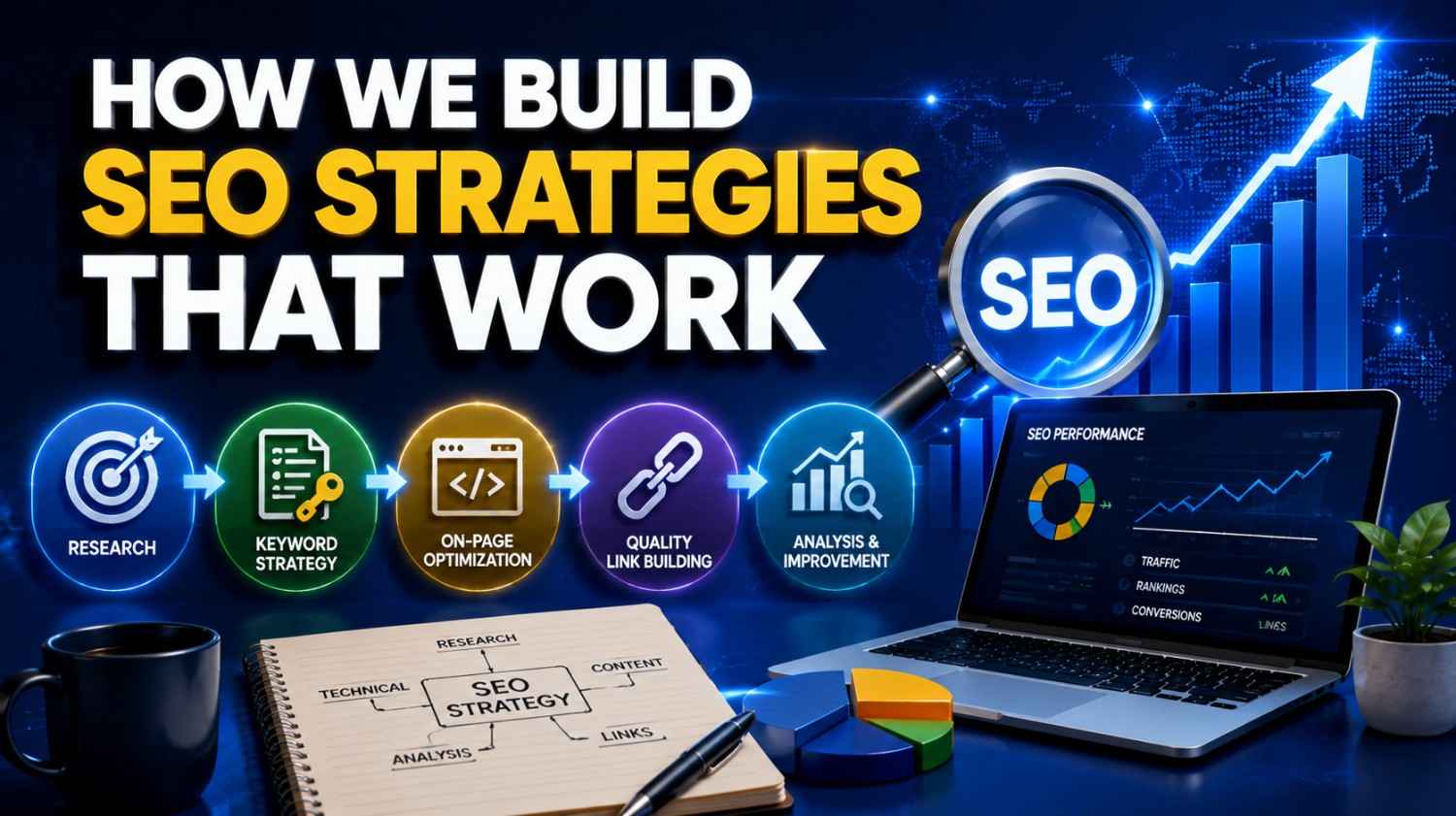
              How We Build SEO Strategies That Work

              How We Build SEO Strategies That Work

              How We Build SEO Strategies That Work


              Search Engine Optimization (SEO) has evolved far beyond adding keywords to a webpage. Today’s ecommerce businesses need a strategy that improves visibility, attracts qualified customers, and adapts to the growing influence of artificial intelligence in online search. Successful SEO is built on research, planning, technical excellence, and continuous optimization rather than short-term tactics.


              Businesses that invest in a structured SEO strategy gain long-term benefits, including higher organic traffic, improved customer trust, stronger brand authority, and sustainable sales growth. When SEO is combined with Generative Engine Optimization (GEO) and Answer Engine Optimization (AEO), businesses are better positioned to appear not only in traditional search engines but also in AI-powered search platforms and conversational search experiences.


              At the core of every successful SEO campaign is a clear understanding of customer intent and a commitment to delivering valuable content.


              Understanding Business Goals First

              Every business has different objectives, target audiences, and competitive challenges. That is why an effective SEO strategy begins with understanding what success looks like for the business.


              Some companies want to increase ecommerce sales, while others focus on generating leads, expanding into new markets, or improving brand awareness. By identifying these objectives early, it becomes easier to create an SEO strategy that supports measurable business growth.


              This business-first approach ensures that every optimization effort contributes to meaningful results rather than simply improving rankings.


              Comprehensive Keyword and Search Intent Research

              Keywords remain an essential part of SEO, but modern optimization focuses on understanding why customers search rather than only what they search for.


              Research includes identifying primary keywords, long-tail phrases, conversational queries, and questions that customers commonly ask before making purchasing decisions.


              Search intent analysis helps businesses create content that matches customer expectations at every stage of the buying journey. This improves both search rankings and user engagement.


              Incorporating GEO and AEO principles into keyword research also prepares content for AI-powered search engines and answer-based search platforms, increasing visibility beyond traditional search results.


              Creating Valuable Content

              Search engines reward websites that consistently publish useful, relevant, and trustworthy content. Every page should provide clear information while solving customer problems and answering important questions.


              Product pages, category pages, blogs, buying guides, and FAQs all contribute to a stronger SEO strategy when written with the customer in mind.


              Instead of focusing only on keyword density, modern content should naturally integrate important search terms while maintaining readability and providing genuine value.


              Well-structured content improves user experience, increases engagement, and encourages visitors to spend more time on the website.


              Strengthening Technical SEO

              Even the best content requires a technically optimized website to perform effectively.


              Technical SEO ensures search engines can easily crawl, understand, and index website content. Fast page loading, mobile responsiveness, secure browsing, clean URL structures, structured data, internal linking, and optimized images all contribute to better search performance.


              Technical improvements also enhance customer experience by making websites easier to navigate and faster to use across all devices.


              Regular technical audits help identify issues before they affect search rankings or customer satisfaction.


              Optimizing for AI Search

              The growth of artificial intelligence has transformed how people search online. AI assistants increasingly generate direct answers instead of displaying only traditional search results.


              Businesses should optimize their content using GEO and AEO principles to ensure AI systems can accurately understand and recommend their information.


              This includes writing clear explanations, answering frequently asked questions, organizing content with logical headings, and using conversational language where appropriate.


              Preparing for AI-powered search today helps businesses remain competitive as digital search continues evolving.


              Measuring and Improving Performance

              SEO is not a one-time project. Search trends, customer behavior, and search engine algorithms continue changing, making ongoing optimization essential.


              Performance should be measured using metrics such as organic traffic, keyword rankings, click-through rates, conversions, engagement, and customer behavior.


              Regular reporting helps businesses identify successful strategies while discovering new opportunities for improvement.


              Continuous refinement allows SEO campaigns to remain effective as markets become more competitive.


              Building Sustainable Results

              Successful SEO is built on consistency rather than shortcuts. Businesses that focus on valuable content, technical excellence, customer experience, and continuous optimization create long-lasting digital assets that generate traffic for years.


              Unlike paid advertising, strong organic visibility continues delivering results without requiring continuous advertising budgets.


              Combining SEO, GEO, and AEO creates a comprehensive strategy that prepares businesses for both today’s search engines and tomorrow’s AI-driven search experiences.


              Conclusion

              Building an SEO strategy that works requires more than technical knowledge—it requires understanding customers, creating valuable content, improving website performance, and adapting to emerging technologies. Businesses that invest in long-term optimization are better positioned to achieve sustainable growth, stronger online visibility, and higher customer engagement.


              At AMZ Northland, we develop customized SEO strategies that combine traditional optimization with modern GEO and AEO practices. From keyword research and technical SEO to marketplace optimization and performance analysis, our team helps ecommerce businesses build a stronger online presence and achieve measurable long-term success.

              Archives
              Recent Comments

                  Request a quote

                  Frequently Asked Questions

                  A successful SEO strategy combines keyword research, valuable content, technical optimization, customer-focused design, and continuous performance monitoring.

                  Understanding search intent helps businesses create content that matches customer needs, improving rankings, engagement, and conversions.

                  Technical SEO enhances website speed, mobile usability, crawlability, security, and indexing, helping search engines understand your content more effectively.

                  GEO focuses on optimizing content so AI-powered search engines can understand, summarize, and recommend it accurately.

                  AEO improves visibility by creating content that directly answers customer questions, increasing the chances of appearing in AI-generated responses and voice search.

                  SEO strategies should be reviewed regularly to reflect algorithm updates, customer behavior, keyword trends, and business goals.

                  AMZ Northland provides professional SEO consulting, ecommerce optimization, technical SEO improvements, GEO and AEO strategies, and ongoing performance analysis to help businesses achieve lasting online growth.