
AI Is Changing Ecommerce Forever

AIisChangingEcommerceForeve

AI Is Changing Ecommerce Forever


Artificial Intelligence (AI) is no longer a futuristic concept—it has become an essential part of modern ecommerce. From personalized shopping experiences to intelligent inventory management and AI-powered search, businesses are embracing advanced technologies to remain competitive in an increasingly digital marketplace.


As customer expectations continue to evolve, ecommerce companies must adapt quickly. Today’s buyers expect faster search results, personalized recommendations, accurate product information, and seamless shopping experiences across multiple platforms. AI is helping businesses meet these expectations while improving operational efficiency and increasing revenue opportunities.


For online sellers, understanding how AI influences ecommerce is becoming just as important as product quality or pricing strategy. Businesses that successfully integrate AI into their operations are better positioned to improve customer satisfaction, strengthen marketplace performance, and achieve long-term growth.


AI Is Transforming Product Discovery

The way customers search for products has changed dramatically. Traditional keyword searches are increasingly being replaced by conversational queries, voice assistants, and AI-powered search experiences.


Modern search engines and ecommerce marketplaces now analyze customer intent rather than relying solely on exact keyword matches. This means product listings must provide meaningful, informative, and well-structured content that answers customer questions naturally.


Businesses should optimize product titles, descriptions, feature lists, and frequently asked questions to improve discoverability across traditional search engines as well as AI-driven platforms. Combining SEO, GEO (Generative Engine Optimization), and AEO (Answer Engine Optimization) ensures content remains visible as search technologies continue to evolve.


Personalized Shopping Experiences

One of AI’s greatest strengths is personalization. Instead of showing every customer the same products, AI analyzes browsing history, purchasing behavior, search activity, and preferences to recommend products that match individual interests.


This personalized approach improves customer engagement while increasing conversion rates and average order values.


Businesses that create informative product content supported by accurate data allow AI systems to deliver more relevant recommendations, benefiting both customers and sellers.

Personalization also strengthens customer loyalty because shoppers are more likely to return when they receive experiences tailored to their needs.


Smarter Inventory Management

Managing inventory has always been one of the biggest challenges in ecommerce. Overstocking increases storage costs, while understocking leads to missed sales opportunities and dissatisfied customers.


AI helps businesses forecast demand more accurately by analyzing historical sales, seasonal trends, customer behavior, and marketplace activity. These insights allow companies to maintain appropriate inventory levels while reducing unnecessary expenses.


Predictive analytics also enables businesses to respond quickly to market changes, helping prevent stock shortages during periods of high demand.


Better Customer Support

AI-powered chatbots and virtual assistants are transforming customer service across ecommerce platforms.


Customers now expect immediate responses to questions about products, shipping, returns, and order status. AI can answer common questions instantly while allowing support teams to focus on more complex customer needs.


Well-structured product pages and informative FAQs also improve AI-generated responses, making it easier for customers to find accurate information without waiting for assistance.


This faster support experience improves customer satisfaction while reducing operational workload.


Data-Driven Decision Making

Successful ecommerce businesses rely on data rather than assumptions. AI analyzes enormous amounts of information much faster than traditional methods, helping businesses identify trends, customer preferences, pricing opportunities, and advertising performance.


Performance metrics such as click-through rates, conversion rates, inventory turnover, customer reviews, and sales patterns provide valuable insights that support smarter business decisions.


Rather than reacting to problems after they occur, AI enables proactive optimization that improves long-term marketplace performance.


Why SEO, GEO, and AEO Matter More Than Ever

Artificial intelligence has changed how search engines understand and display content. Businesses must now optimize for multiple search environments instead of relying solely on traditional SEO.


SEO continues to improve visibility in search engines and ecommerce marketplaces.


GEO helps AI-powered search platforms understand, summarize, and recommend product content more effectively.


AEO ensures product information answers customer questions clearly, increasing the likelihood of appearing in conversational search, voice assistants, and AI-generated responses.


Together, these strategies help businesses remain competitive as AI continues reshaping digital commerce.


Preparing for the Future of Ecommerce

AI technology will continue evolving rapidly. Businesses that embrace innovation, continuously optimize their content, and invest in customer-focused experiences will have significant advantages over competitors that rely on outdated strategies.


Future ecommerce success will depend on combining intelligent automation with human expertise. Businesses should focus on creating accurate, trustworthy, and engaging product information while using AI to improve efficiency and customer satisfaction.


Those who adapt early will be better positioned to capitalize on new opportunities as AI becomes increasingly integrated into every stage of the online shopping journey.


Conclusion

Artificial Intelligence is transforming every aspect of ecommerce—from product discovery and customer service to inventory management and search optimization. Businesses that embrace AI while implementing strong SEO, GEO, and AEO strategies can improve visibility, enhance customer experiences, and build sustainable long-term growth.


At AMZ Northland, we help ecommerce businesses navigate these changes with customized marketplace strategies, AI-ready content optimization, inventory planning, product listing improvements, and data-driven consulting. Our goal is to help brands adapt to the future of ecommerce while achieving measurable results in an increasingly competitive digital marketplace.

Archives
Recent Comments

      Request a quote

      Frequently Asked Questions

      AI improves product discovery, customer personalization, inventory forecasting, customer support, and business decision-making through intelligent automation and data analysis.

      AI helps businesses improve efficiency, enhance customer experiences, optimize marketing strategies, and increase sales opportunities.

      Generative Engine Optimization focuses on creating content that AI-powered search engines can easily understand, summarize, and recommend.

      Answer Engine Optimization improves visibility by providing clear answers that appear in AI-generated responses and voice search results.

      Yes. AI analyzes sales patterns, seasonal demand, and customer behavior to help businesses maintain optimal inventory levels.

      Absolutely. SEO remains essential for improving visibility in search engines and ecommerce marketplaces while working alongside GEO and AEO strategies.

      AMZ Northland provides expert ecommerce consulting, AI-ready marketplace optimization, Amazon growth strategies, inventory planning, and performance analysis to help businesses achieve sustainable long-term success.


      Celebrating 500+ Successful Product Launches!

      Celebrating 500 Successful Product Launches

      Celebrating 500+ Successful Product Launches!


      Launching a product in today’s ecommerce marketplace is about much more than making it available for purchase. Success requires careful planning, strategic optimization, market research, and continuous performance improvements. Every product launch presents an opportunity to build brand awareness, attract new customers, and create long-term business growth.


      Reaching the milestone of 500+ successful product launches reflects the importance of having a structured launch strategy backed by marketplace expertise and data-driven decision-making. Each successful launch represents careful preparation, effective optimization, and a commitment to helping businesses achieve measurable results in highly competitive online marketplaces.


      As ecommerce continues to evolve, businesses must adopt modern SEO, GEO (Generative Engine Optimization), and AEO (Answer Engine Optimization) practices to maximize product visibility and customer engagement from day one.


      Building a Strong Foundation Before Launch

      Every successful product launch begins long before the product becomes available online. Preparation is one of the most important factors influencing long-term marketplace performance.


      A comprehensive launch strategy starts with market research, competitor analysis, audience identification, and keyword planning.


      Understanding customer needs allows businesses to position products more effectively while identifying opportunities that competitors may have overlooked.


      Preparing optimized product listings, professional images, compelling descriptions, and accurate product information ensures shoppers receive a positive first impression. These elements also help marketplace algorithms understand the product and display it to relevant customers.


      The Importance of Marketplace Optimization

      Visibility plays a critical role in determining whether a new product succeeds or struggles. Even outstanding products require proper optimization to appear in search results and attract potential buyers.


      Effective product optimization includes keyword-focused titles, informative descriptions, high-quality product images, relevant backend search terms, and enhanced content that answers customer questions naturally.


      Rather than focusing only on traditional SEO, modern ecommerce businesses also optimize content for AI-powered search engines and conversational search experiences. GEO and AEO strategies make product information easier for artificial intelligence systems to understand, summarize, and recommend to potential customers.


      This broader optimization approach increases opportunities for customers to discover products through multiple search channels.


      Creating Customer Confidence

      Customers are more likely to purchase products when they have complete and accurate information. Successful launches focus not only on attracting visitors but also on building trust throughout the buying journey.


      Clear product descriptions, feature highlights, comparison content, usage instructions, and frequently asked questions help customers make informed purchasing decisions. Professional product images and consistent branding further improve credibility while reducing uncertainty.


      Providing an excellent customer experience from the beginning often results in stronger reviews, higher conversion rates, and improved marketplace rankings.


      Monitoring Performance After Launch

      A product launch is only the beginning of the optimization process. Continuous monitoring allows businesses to identify opportunities for improvement while responding quickly to customer behavior and marketplace changes.


      Important performance indicators include search rankings, click-through rates, conversion rates, advertising performance, inventory levels, customer reviews, and sales trends.


      Regular analysis helps businesses refine product listings, improve advertising campaigns, adjust pricing strategies, and optimize customer engagement over time.


      Businesses that consistently evaluate performance are better equipped to sustain growth after the initial launch period.


      Scaling Success Across Multiple Products

      One successful launch creates valuable insights for future products. Businesses that document performance data and customer feedback develop repeatable strategies that improve future launches.


      As organizations gain experience, launching additional products becomes more efficient because proven optimization techniques can be applied consistently across new product lines.


      This scalable approach enables brands to expand their catalogs while maintaining high-quality customer experiences and strong marketplace performance.


      Looking Ahead

      Ecommerce technology continues to evolve with artificial intelligence, voice search, predictive recommendations, and advanced marketplace algorithms shaping how customers discover products.


      Businesses that invest in SEO, GEO, and AEO strategies today will be better positioned for future growth. Creating informative, customer-focused content while continuously optimizing product listings helps brands remain competitive as digital commerce continues to change.


      Product launches will always be important milestones, but long-term success comes from ongoing improvement rather than one-time optimization.


      Conclusion

      Celebrating 500+ successful product launches represents more than a milestone—it reflects a commitment to strategic planning, continuous optimization, and measurable business growth. Every successful launch demonstrates the value of combining market research, customer-focused content, performance analysis, and modern ecommerce best practices.


      At AMZ Northland, we help businesses plan, optimize, and manage successful product launches with customized ecommerce strategies designed to improve marketplace visibility, strengthen customer engagement, and support sustainable long-term growth. Whether introducing a new product or expanding an existing catalog, our experienced team provides the expertise businesses need to launch with confidence and achieve lasting success.

      Archives
      Recent Comments

          Request a quote

          Frequently Asked Questions

          A successful product launch combines market research, keyword optimization, high-quality listings, effective marketing, and continuous performance monitoring.

          Keyword research helps businesses understand customer search behavior and optimize listings to improve visibility in marketplace search results.

          SEO improves search visibility, GEO optimizes content for AI-powered search engines, and AEO helps products appear in conversational and answer-based search experiences.

          Yes. Continuous optimization based on customer feedback, search trends, and marketplace performance helps maintain strong rankings and improve conversions.

          Businesses should track search rankings, conversion rates, advertising performance, inventory levels, customer reviews, and overall sales performance.

          A positive customer experience builds trust, encourages reviews, improves conversion rates, and supports stronger marketplace rankings.

          AMZ Northland provides expert ecommerce consulting, product launch planning, marketplace optimization, performance analysis, and long-term growth strategies that help businesses maximize the success of every product launch.

          Client Spotlight: 200% Growth in 90 Days

          Client Spotlight 200 Growth in 90 Days

          Client Spotlight: 200% Growth in 90 Days


          Every successful ecommerce business has a story behind its growth. While some brands achieve gradual success over several years, others experience rapid transformation when they implement the right strategy at the right time. This client spotlight highlights how a business achieved 200% growth in just 90 days by focusing on marketplace optimization, data-driven decision-making, and continuous improvement.


          Although every business has unique challenges, the principles behind this success can be applied to sellers across multiple ecommerce marketplaces. With a structured approach to SEO, GEO (Generative Engine Optimization), and AEO (Answer Engine Optimization), businesses can improve product visibility, attract qualified customers, and increase long-term profitability.


          The Challenge

          The client operated in a competitive ecommerce niche with quality products but struggled to gain consistent visibility. Product listings generated traffic, but conversion rates remained below expectations. Inventory planning was inconsistent, advertising costs were increasing, and organic rankings had started to decline.


          The business needed a strategy that would improve marketplace performance while creating sustainable growth instead of relying solely on paid advertising.


          After evaluating sales data, customer behavior, keyword performance, and marketplace trends, a comprehensive optimization plan was developed to address the underlying issues affecting growth.


          Building a Growth Strategy

          The first step was conducting a complete review of the client’s ecommerce presence. Product listings, keywords, images, pricing strategy, customer feedback, advertising campaigns, and inventory management were carefully analyzed.


          Instead of making random adjustments, every recommendation was supported by data and aligned with customer search intent.


          The optimization strategy focused on improving product discoverability while creating a better shopping experience for potential buyers. This balanced approach allowed both organic visibility and conversion rates to improve simultaneously.


          Improving Product Visibility

          One of the biggest opportunities was enhancing listing quality. Product titles were refined using relevant search terms, descriptions were rewritten to answer customer questions more effectively, and product features were presented in a clear and engaging format.


          High-quality product images were updated to showcase important product details while improving customer confidence.


          The content was also optimized for conversational search queries, making it easier for AI-powered search engines and answer engines to understand and recommend the listings. This modern optimization approach supported stronger performance across both traditional search and emerging AI search experiences.


          Optimizing Customer Experience

          Increasing traffic alone does not guarantee higher sales. Visitors must also feel confident enough to complete a purchase.

          The client focused on improving every stage of the customer journey. Product information became easier to understand, frequently asked questions were addressed directly within listings, and inventory availability was carefully monitored to prevent stock shortages.


          Customer inquiries received faster responses, and continuous monitoring helped identify opportunities to improve buyer satisfaction. These improvements contributed to stronger customer trust and higher conversion rates throughout the campaign.


          Measuring Continuous Performance

          Rather than waiting until the end of the campaign, performance was monitored weekly. Key metrics including organic rankings, click-through rates, advertising efficiency, conversion rates, customer feedback, and sales performance were reviewed regularly.


          This allowed small adjustments to be made before problems affected overall performance. Seasonal trends, competitor activity, and customer behavior were also considered when refining the strategy.


          Continuous optimization ensured the business remained competitive throughout the entire 90-day period.


          The Results

          Within just three months, the business experienced significant improvements across multiple performance indicators.


          Organic visibility increased as listings ranked for more relevant search terms. Conversion rates improved because customers found clearer product information and a better shopping experience. Advertising campaigns became more efficient, reducing unnecessary spending while generating stronger returns.


          Most importantly, overall sales increased by 200% within 90 days, creating a stronger foundation for long-term ecommerce growth.


          Although every business produces different results, this case demonstrates the value of combining marketplace expertise with consistent optimization and data-driven decision-making.


          Lessons for Every Ecommerce Business

          Rapid growth is rarely the result of a single tactic. Instead, it comes from improving multiple aspects of an ecommerce business simultaneously.


          Businesses that invest in high-quality listings, customer experience, keyword optimization, inventory planning, and ongoing performance analysis position themselves for stronger marketplace success.


          SEO helps products become more discoverable through traditional search engines. GEO improves visibility within AI-generated search experiences, while AEO ensures product content directly answers customer questions. Together, these strategies create a more effective digital presence that supports sustainable growth.


          Conclusion

          Growing an ecommerce business requires more than attracting visitors. Success depends on creating exceptional customer experiences, continuously improving marketplace performance, and adapting to evolving search technologies.


          At AMZ Northland, we partner with ecommerce businesses to develop customized strategies that improve product visibility, increase conversions, optimize marketplace performance, and support long-term growth. Whether your goal is to launch a new product, expand into new marketplaces, or improve existing sales performance, our experienced team provides practical solutions designed to help your business achieve measurable results.

          Archives
          Recent Comments

              Request a quote

              Frequently Asked Questions

              The growth resulted from improved product listings, keyword optimization, enhanced customer experience, data-driven decision-making, and continuous marketplace optimization.

              Results vary depending on the industry, competition, products, and strategy, but consistent optimization significantly improves growth potential.

              SEO helps products rank higher in marketplace and search engine results, increasing visibility and attracting qualified customers.

              Generative Engine Optimization creates content that AI-powered search engines can easily understand, summarize, and recommend to users.

              Answer Engine Optimization focuses on providing clear answers to customer questions, improving visibility in AI-generated responses and voice search.

              Continuous monitoring helps identify trends, improve conversions, optimize advertising, and respond quickly to changing customer behavior.

              AMZ Northland provides professional ecommerce consulting, marketplace optimization, Amazon growth strategies, inventory planning, and performance analysis to help businesses achieve sustainable long-term success.

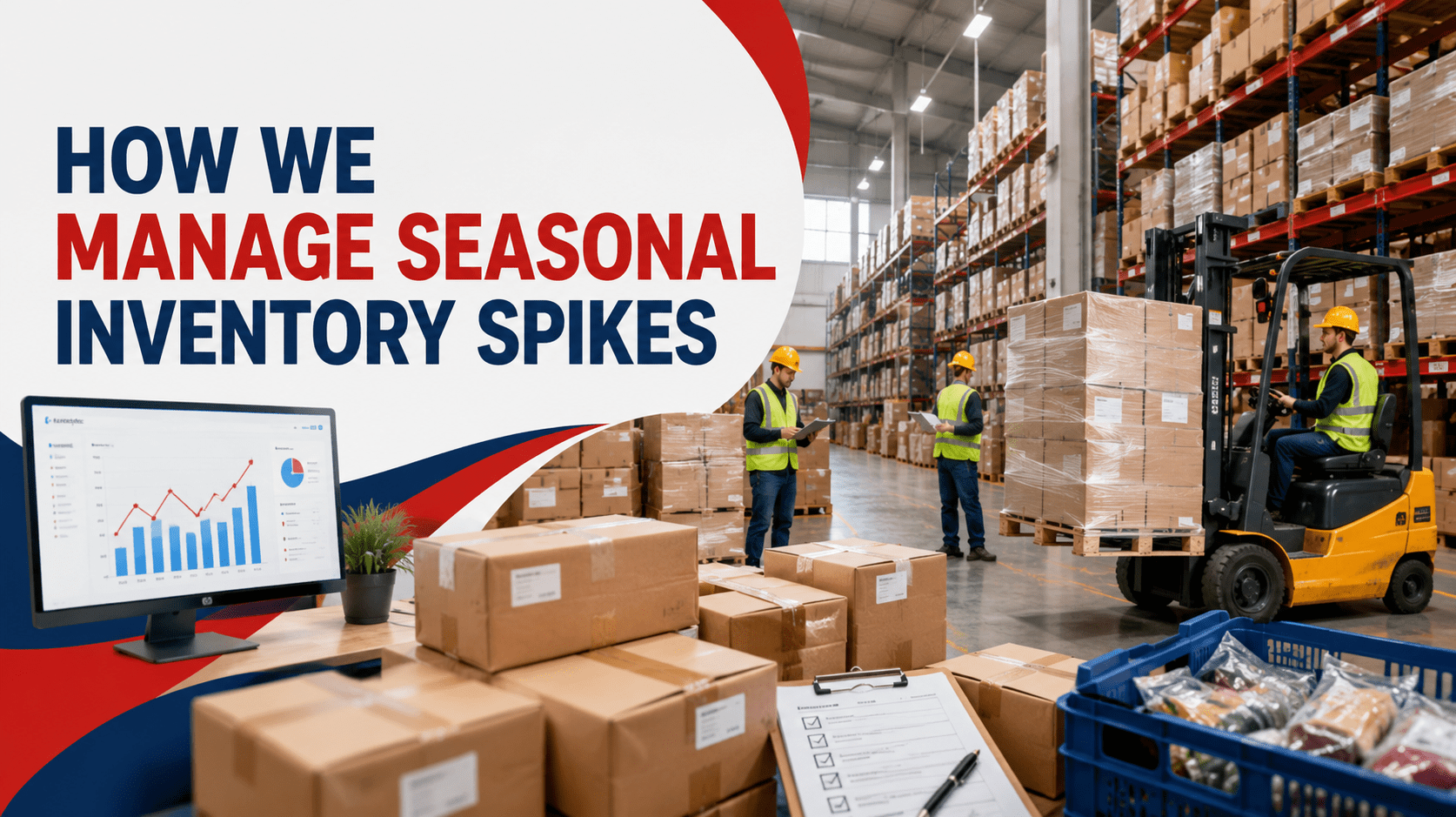
              How We Manage Seasonal Inventory Spikes

              How We Manage Seasonal Inventory Spikes

              How We Manage Seasonal Inventory Spikes


              Seasonal demand can create enormous opportunities for ecommerce businesses, but it can also become one of the biggest operational challenges. Peak shopping periods such as Black Friday, Cyber Monday, Christmas, back-to-school season, and holiday promotions often lead to sudden increases in customer orders. Without proper inventory planning, businesses risk stockouts, delayed deliveries, excess inventory, and lost revenue.


              At AMZ Northland, we understand that effective inventory management is essential for maintaining customer satisfaction and supporting long-term business growth. Our inventory strategies combine data analysis, marketplace insights, SEO, GEO (Generative Engine Optimization), and AEO (Answer Engine Optimization) best practices to help ecommerce brands stay prepared for seasonal demand.


              Understanding Seasonal Demand Patterns

              Successful inventory management begins with understanding customer buying behavior. Seasonal trends rarely happen without warning. Historical sales reports, marketplace data, customer purchasing habits, and industry trends provide valuable insights into future demand.


              Rather than reacting when sales begin to increase, businesses should forecast demand months in advance. Accurate forecasting allows companies to prepare inventory levels, coordinate with suppliers, and optimize warehouse operations before peak seasons begin.


              Using predictive analytics also helps businesses identify which products are likely to experience the highest demand while reducing unnecessary investment in slow-moving inventory.


              Forecasting Inventory with Real-Time Data

              Modern ecommerce relies heavily on data-driven decision-making. Sales history alone is no longer enough to predict future demand accurately.


              At AMZ Northland, we evaluate multiple data sources, including seasonal sales trends, keyword search volume, advertising performance, customer demand, marketplace insights, and inventory turnover rates. Combining these data points creates more reliable inventory forecasts that reduce uncertainty during peak seasons.


              Real-time monitoring also allows businesses to adjust inventory strategies as customer behavior changes throughout promotional events.


              Maintaining the Right Inventory Balance

              One of the biggest challenges during seasonal promotions is balancing inventory levels. Ordering too little inventory can result in stockouts, missed sales opportunities, and lower marketplace rankings. Ordering too much can increase storage costs and tie up valuable capital.


              A strategic inventory management plan focuses on maintaining optimal stock levels while keeping replenishment cycles efficient. Businesses should establish reorder points, maintain safety stock for high-demand products, and continuously monitor inventory performance throughout the season.


              This balanced approach minimizes risk while ensuring customers receive products without unnecessary delays.


              Coordinating Supply Chain Operations

              Inventory management extends beyond warehouse shelves. Suppliers, manufacturers, shipping partners, and fulfillment centers all play critical roles during seasonal demand spikes.


              Strong communication with supply chain partners helps reduce disruptions and improve delivery timelines. Businesses should confirm production schedules early, monitor supplier performance, and prepare contingency plans for unexpected delays.


              Diversifying suppliers and planning shipments in advance also reduces dependence on a single source, creating greater flexibility during high-demand periods.


              Optimizing Listings During Seasonal Campaigns

              Seasonal inventory performs best when customers can easily discover products. Well-optimized product listings improve visibility during periods of increased search activity.


              Businesses should update seasonal keywords, refresh product descriptions, improve product images, and answer common customer questions directly within their listings. These optimization techniques support traditional Amazon SEO while also improving GEO and AEO performance across AI-powered search platforms and voice search technologies.


              Providing complete, accurate, and informative product content encourages higher engagement, stronger conversion rates, and improved marketplace visibility.


              Monitoring Performance Throughout the Season

              Inventory management does not stop after products are stocked. Continuous monitoring allows businesses to respond quickly to changing demand.


              Performance indicators such as inventory turnover, daily sales velocity, advertising performance, stock availability, and customer feedback should be reviewed regularly. These insights help businesses identify products that require additional inventory, pricing adjustments, or promotional support.


              Real-time optimization ensures inventory remains aligned with customer demand throughout the entire sales season.


              Preparing for Future Seasonal Success

              Every seasonal campaign provides valuable insights for future planning. Reviewing sales performance, inventory accuracy, customer behavior, and fulfillment efficiency helps businesses refine their strategies for the next peak season.


              Continuous improvement enables ecommerce brands to reduce costs, improve operational efficiency, and deliver better customer experiences year after year.


              Businesses that combine forecasting, data analysis, and ongoing optimization are better positioned to achieve sustainable ecommerce growth regardless of seasonal fluctuations.


              Conclusion

              Seasonal inventory spikes present significant opportunities for ecommerce businesses, but success depends on preparation, accurate forecasting, and proactive inventory management. By leveraging real-time data, optimizing product listings, strengthening supply chain coordination, and monitoring marketplace performance, businesses can confidently meet customer demand during even the busiest shopping seasons.


              At AMZ Northland, we help ecommerce businesses develop customized inventory management strategies that improve operational efficiency, reduce stock-related risks, and maximize sales opportunities. Our experienced team works closely with brands to build scalable ecommerce solutions that support long-term growth while ensuring businesses remain prepared for every seasonal demand cycle.

              Archives
              Recent Comments

                  Request a quote

                  Frequently Asked Questions

                  Seasonal inventory spikes occur during periods of increased customer demand, including holidays, promotional events, and special shopping seasons.

                  Forecasting helps businesses estimate future demand, maintain appropriate stock levels, and reduce the risk of stockouts or excess inventory.

                  Businesses should monitor inventory regularly, maintain safety stock, establish reorder points, and work closely with suppliers before peak seasons.

                  SEO improves product visibility during high-demand periods, allowing customers to discover products more easily through marketplace and search engine results.

                  GEO helps optimize content for AI-powered search engines, while AEO improves visibility by providing clear answers to customer questions in conversational search experiences.

                  Inventory should be monitored continuously during peak seasons using sales trends, stock levels, advertising performance, and customer demand data.

                  AMZ Northland provides expert ecommerce consulting, inventory planning, marketplace optimization, and data-driven growth strategies that help businesses improve efficiency, meet seasonal demand, and achieve long-term success.