Amazon FBA Canada Guide

Amazon FBA Canada Guide

Amazon FBA Canada Guide


Selling on Amazon has become one of the most effective ways for businesses to reach millions of customers while minimizing operational complexity. One of the biggest advantages available to sellers is Fulfillment by Amazon (FBA), a service that allows Amazon to store inventory, process orders, pack products, ship purchases, and manage customer service on behalf of sellers.


For businesses expanding into Canada, Amazon FBA provides an excellent opportunity to grow sales while improving delivery speed and customer satisfaction. Whether you are launching your first product or expanding an existing eCommerce brand, understanding how Amazon FBA works can help you build a scalable online business.


At AMZ Northland, we help businesses successfully launch, optimize, and manage Amazon stores through professional Amazon account management, listing optimization, inventory management, and marketplace growth strategies.


What Is Amazon FBA?

Amazon FBA is a fulfillment service where sellers send inventory to Amazon fulfillment centers. Once inventory is received, Amazon manages storage, order processing, packing, shipping, returns, and customer support.


This allows sellers to focus on product sourcing, marketing, and business growth instead of handling daily fulfillment operations.


Many businesses choose Amazon FBA because it simplifies logistics while providing customers with fast and reliable delivery services.


Benefits of Selling with Amazon FBA in Canada

Amazon FBA offers several advantages for businesses entering the Canadian eCommerce market.


One of the biggest benefits is access to Amazon’s advanced fulfillment network. Products stored in Amazon warehouses can be delivered quickly, helping businesses improve customer satisfaction and increase conversion rates.


FBA also reduces operational workload by allowing Amazon to manage order fulfillment, returns, and customer service. This enables sellers to spend more time improving products, expanding catalogs, and growing sales.


Additionally, businesses using FBA often gain increased buyer confidence because customers recognize Amazon’s reliable shipping and support services.


Setting Up Your Amazon FBA Business

Before using Amazon FBA, businesses need to establish a professional seller account and prepare their product catalog.


Each product should include optimized titles, descriptions, bullet points, keywords, images, and accurate product information. High-quality listings improve product visibility while increasing conversion opportunities.


Inventory must also be properly labeled and prepared according to Amazon’s packaging and shipping requirements before being sent to fulfillment centers.


Proper preparation reduces delays and helps inventory become available for sale more quickly.


Inventory Management Best Practices

Effective inventory management is essential for long-term Amazon FBA success.


Businesses should regularly monitor inventory levels, forecast customer demand, and replenish stock before products become unavailable.


Running out of inventory may reduce product rankings and negatively affect sales performance. On the other hand, maintaining excessive inventory can increase storage costs.


Using inventory forecasting tools and sales reports helps sellers maintain healthy stock levels while reducing unnecessary expenses.


Optimize Your Product Listings

Even with Amazon FBA handling fulfillment, product visibility remains critical.


Successful sellers invest in Amazon SEO, keyword optimization, professional product photography, compelling product descriptions, and enhanced product content.


Optimized listings improve search rankings while helping customers better understand product features and benefits.


Well-written content also supports Answer Engine Optimization (AEO) by directly addressing common customer questions and improving product discoverability.


Expand Beyond Amazon

Many successful businesses use Amazon FBA as part of a broader multichannel selling strategy.


In addition to Amazon, businesses often sell through Walmart, Shopify, Etsy, eBay, and their own websites while managing inventory through centralized systems.


Diversifying sales channels reduces dependence on a single marketplace while creating additional revenue opportunities.


Professional marketplace management ensures consistent inventory, pricing, and product information across every platform.


Common Challenges with Amazon FBA

Although Amazon FBA offers significant advantages, businesses should understand potential challenges.


Inventory planning, product compliance, listing optimization, pricing strategies, storage fees, and account performance all require ongoing management.


Regular performance monitoring helps businesses identify opportunities for improvement while maintaining compliance with Amazon policies.

Working with experienced eCommerce professionals can simplify these processes and support sustainable business growth.


How AMZ Northland Can Help

AMZ Northland provides complete Amazon marketplace management services for businesses selling in Canada and expanding into international markets.


Our services include:

• Amazon account setup

• Product listing optimization

• Amazon SEO

• Inventory management

• Catalog management

• Marketplace expansion

• Advertising optimization

• Performance monitoring

• Multichannel eCommerce management


Our experienced team helps businesses improve product visibility, increase sales, and build scalable Amazon operations through customized eCommerce strategies.


Final Thoughts

Amazon FBA provides businesses with an efficient way to grow their online presence while outsourcing fulfillment operations to one of the world’s largest logistics networks.


Success on Amazon depends on more than simply shipping inventory to fulfillment centers. Businesses must focus on listing optimization, inventory planning, customer experience, and marketplace management to remain competitive.


By partnering with AMZ Northland, businesses can simplify Amazon operations, improve marketplace performance, and achieve sustainable eCommerce growth across Canada and international markets.

Archives
Recent Comments

      Request a quote

      Frequently Asked Questions

      Amazon FBA is a fulfillment service where Amazon stores inventory, ships orders, manages returns, and provides customer service for sellers.

      Yes. Amazon FBA supports sellers who want to reach customers throughout Canada using Amazon’s fulfillment network.

      Benefits include faster shipping, professional fulfillment, customer support, inventory storage, and improved buyer confidence.

      Proper inventory management helps avoid stock shortages, reduce storage costs, and maintain product rankings.

      Yes. Many businesses combine Amazon FBA with Walmart, Shopify, Etsy, eBay, and other marketplaces.

      Optimized listings improve product visibility, search rankings, and conversion rates within Amazon search results.

      AMZ Northland provides Amazon account management, listing optimization, inventory management, marketplace expansion, advertising support, and multichannel eCommerce solutions for businesses selling across Canada and the USA.
      How to Manage Inventory Across Multiple Marketplaces

      How to Manage Inventory Across Multiple Marketplaces

      How to Manage Inventory Across Multiple Marketplaces


      Selling products across multiple online marketplaces is one of the fastest ways to grow an eCommerce business. Platforms such as Amazon, Walmart, eBay, Etsy, Shopify, and other online marketplaces allow businesses to reach more customers, increase sales, and expand into new markets. However, managing inventory across several sales channels can quickly become challenging without the right processes and technology.


      Overselling, stock shortages, delayed order fulfillment, and inaccurate inventory data can negatively impact customer satisfaction and marketplace performance. Businesses that implement effective inventory management strategies can reduce operational errors while improving profitability and customer experience.


      At AMZ Northland, we help businesses streamline multichannel eCommerce operations, optimize inventory management, and improve marketplace performance across Canada and the USA through professional eCommerce management solutions.


      Why Multichannel Inventory Management Matters

      Modern customers shop across multiple online marketplaces. They expect products to be available regardless of where they choose to purchase. If inventory levels are not synchronized, businesses may accidentally sell products that are already out of stock.


      Proper inventory management ensures accurate stock levels across every sales channel, reducing cancelled orders, negative reviews, and account performance issues.


      Businesses with efficient inventory systems also gain better visibility into product demand, purchasing trends, and warehouse performance.


      Centralize Inventory Management

      Managing inventory separately for each marketplace often leads to inconsistencies and unnecessary manual work. A centralized inventory management system allows businesses to monitor stock levels from a single dashboard.


      Centralized systems automatically update inventory whenever a sale occurs, ensuring that every connected marketplace reflects accurate stock availability in real time.

      This approach minimizes inventory discrepancies while improving operational efficiency.


      Use Inventory Synchronization Software

      Inventory synchronization software plays a critical role in successful multichannel selling. These tools automatically adjust inventory across marketplaces whenever stock changes.


      Instead of manually updating product quantities on Amazon, Walmart, eBay, Shopify, and Etsy, businesses can automate the entire process.

      Automation reduces human error, saves time, and helps maintain accurate product availability across all sales channels.


      Forecast Inventory Demand

      Successful inventory management depends on accurate forecasting. Businesses should regularly analyze sales history, seasonal demand, customer purchasing behavior, and marketplace trends.


      Demand forecasting helps businesses maintain optimal inventory levels while reducing excess stock and preventing shortages.


      Retailers can also prepare for seasonal sales events, promotional campaigns, and holiday shopping periods more effectively.


      Maintain Accurate Product Information

      Consistent product information across all marketplaces improves customer experience and simplifies inventory management.


      Businesses should ensure that product titles, SKUs, descriptions, images, pricing, and inventory records remain consistent across every platform.


      Standardized product data also reduces listing errors and improves synchronization between inventory systems.


      Monitor Warehouse Performance

      Inventory management is not limited to digital marketplaces. Warehouse operations directly affect order fulfillment speed and inventory accuracy.


      Businesses should regularly review receiving processes, storage organization, picking procedures, packing accuracy, and shipping performance.


      Efficient warehouse management reduces delays while improving customer satisfaction and marketplace seller metrics.


      Automate Reordering Processes

      Running out of inventory can reduce sales opportunities and negatively affect marketplace rankings.


      Businesses should establish automatic reorder points based on sales velocity, supplier lead times, and inventory turnover.


      Automated purchasing helps maintain healthy inventory levels while reducing manual inventory planning.


      Analyze Inventory Performance

      Regular reporting allows businesses to identify slow-moving products, best-selling items, seasonal demand, and inventory turnover rates.


      Inventory analytics help improve purchasing decisions, optimize warehouse space, and increase profitability.


      Businesses that monitor inventory performance continuously are better prepared to respond to changing market conditions.


      How AMZ Northland Can Help

      AMZ Northland specializes in professional eCommerce marketplace management, inventory optimization, catalog management, listing optimization, order management, marketplace account management, and multichannel selling solutions.


      Our team helps businesses efficiently manage inventory across Amazon, Walmart, Shopify, Etsy, eBay, and other online marketplaces while improving operational efficiency throughout Canada and the USA.


      Whether you are expanding into new marketplaces or optimizing existing operations, our experienced team provides customized solutions designed to support long-term business growth.


      Final Thoughts

      Managing inventory across multiple marketplaces requires more than simply updating stock quantities. It requires centralized systems, automation, forecasting, accurate product information, warehouse optimization, and continuous performance monitoring.


      Businesses that invest in effective inventory management strategies reduce operational risks, improve customer satisfaction, and create scalable eCommerce operations capable of supporting long-term growth.


      With professional marketplace management from AMZ Northland, businesses can simplify multichannel inventory management while maximizing sales opportunities across Canada and the USA.

      Archives
      Recent Comments

          Request a quote

          Frequently Asked Questions

          Inventory management helps maintain accurate stock levels, reduce overselling, and improve customer satisfaction.

          Inventory synchronization automatically updates stock quantities across multiple marketplaces whenever inventory changes.

          Many businesses manage inventory across Amazon, Walmart, Shopify, Etsy, eBay, and other online marketplaces.

          Demand forecasting helps businesses maintain optimal stock levels and prepare for seasonal sales.

          Automation reduces manual work, minimizes errors, and keeps inventory accurate across every marketplace.

          Efficient warehouse operations improve order accuracy, fulfillment speed, and inventory reliability.

          AMZ Northland provides inventory optimization, marketplace management, listing optimization, catalog management, order management, and multichannel eCommerce solutions for businesses operating across Canada and the USA.

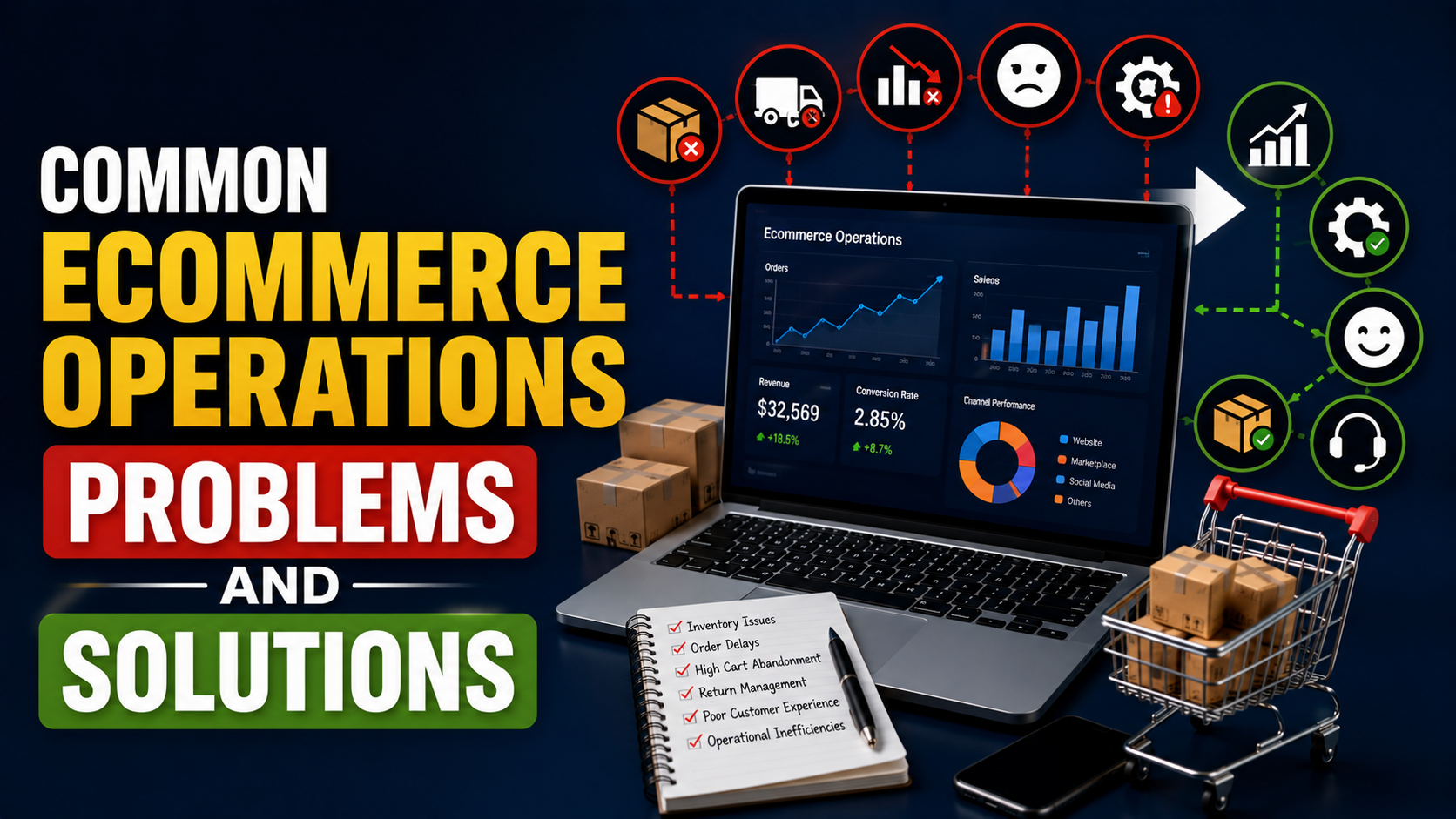
          Common Ecommerce Operations Problems and Solutions

          Common Ecommerce Operations Problems and Solutions

          Common Ecommerce Operations Problems and Solutions


          Running an eCommerce business is exciting. The ability to reach customers across Amazon, Walmart, eBay, Shopify, Etsy, and other marketplaces gives brands tremendous growth opportunities. However, behind every successful online store is a complex operation that requires planning, coordination, and constant attention.


          In the early stages, many businesses manage everything themselves. They update listings, process orders, answer customer questions, track inventory, and monitor advertising campaigns. While this approach may work when order volumes are low, it becomes increasingly difficult as the business expands.


          As sales grow, small operational issues that once seemed manageable can quickly turn into major obstacles. Delayed shipments, inventory shortages, rising advertising costs, and customer complaints can affect profitability and damage a brand’s reputation.


          The reality is that operational challenges are not a sign of failure. They are often a sign that a business is growing and needs stronger systems to support that growth.


          At Amz Northland, we help eCommerce brands identify operational bottlenecks, improve efficiency, and build scalable processes that support long-term success.


          Why Ecommerce Operations Become More Complex

          Most entrepreneurs begin with a simple goal: sell great products and provide excellent service.


          Initially, managing operations feels straightforward. Orders are manageable, inventory is easy to track, and customer inquiries are limited. Then growth happens.


          A business starts selling more products, expanding into new marketplaces, launching advertising campaigns, and introducing additional SKUs. Suddenly, tasks that once took an hour each day require an entire team.


          Without efficient processes, businesses often find themselves constantly reacting to problems instead of focusing on growth opportunities.


          This is where operational excellence becomes critical. The brands that scale successfully are not necessarily those with the biggest budgets. They are often the businesses that build systems capable of supporting increasing complexity.


          Problem 1: Inventory Stockouts and Overstocking

          Inventory management is one of the most common operational challenges in eCommerce.


          Running out of stock means missed sales opportunities. Customers who cannot find your products may purchase from competitors instead. Frequent stockouts can also negatively impact marketplace rankings, making it harder to recover lost visibility.


          At the same time, ordering too much inventory creates its own problems. Excess stock increases storage costs, ties up cash flow, and may lead to markdowns if products do not sell as expected.


          Many businesses struggle because they rely on estimates rather than accurate forecasting.


          The Solution

          Inventory decisions should be guided by data rather than assumptions.


          Review historical sales patterns, monitor seasonal trends, and account for upcoming promotions before placing purchase orders. Regular inventory reviews help businesses identify fast-moving products and avoid costly surprises.


          The goal is balance: enough stock to meet demand without creating unnecessary expenses.


          Problem 2: Inconsistent Product Listings

          As brands expand into multiple channels, maintaining consistent product information becomes more challenging. Different product titles, outdated descriptions, inconsistent images, and missing specifications can confuse customers and weaken trust.


          A customer who sees conflicting information across channels may hesitate to complete a purchase. Inconsistent listings can also contribute to higher return rates because expectations are not clearly set.


          The Solution

          Develop a standardized approach to product content. Ensure that product information remains accurate and consistent across every marketplace while adapting to each platform’s requirements.


          Strong listings not only improve customer confidence but also support better visibility and conversion rates.


          At Amz Northland, listing optimization focuses on creating content that appeals to both marketplace algorithms and shoppers.


          Problem 3: Rising Advertising Costs

          Advertising has become essential for visibility on major marketplaces.


          However, many businesses notice that advertising expenses continue increasing while profits remain unchanged. This often happens when campaigns are launched without ongoing optimization.


          Businesses may target broad keywords, overlook wasted spend, or fail to adjust strategies based on performance data.

          The result is frustration and declining profitability.


          The Solution

          Advertising should be treated as an investment rather than an expense. Regularly analyze campaign performance, identify profitable keywords, and eliminate areas of inefficiency.


          Optimizing bids, refining targeting, and improving product listings can significantly improve advertising returns.


          Effective advertising is not about spending more. It is about spending smarter.


          Problem 4: Order Fulfillment Delays

          Customer expectations have changed dramatically. Fast and reliable shipping is no longer viewed as a bonus. It is expected.


          When businesses struggle to fulfill orders promptly, customer satisfaction declines. Negative reviews increase, marketplace metrics suffer, and repeat purchase rates often decrease.


          As order volumes grow, fulfillment systems that once worked efficiently can begin to break down.


          The Solution

          Evaluate your fulfillment process regularly. Identify where delays occur and implement improvements before they impact customers.


          Whether fulfillment is handled internally or through third-party providers, consistency and reliability should remain priorities.


          Timely deliveries strengthen customer trust and support positive marketplace performance.


          Problem 5: Customer Service Challenges

          Exceptional customer service can set an eCommerce brand apart from competitors. Unfortunately, many businesses become overwhelmed by increasing volumes of customer inquiries.


          Delayed responses, unresolved concerns, and inconsistent communication often lead to dissatisfaction. Customers remember how businesses handle problems.

          A poor service experience can damage brand perception, while a positive interaction can build lasting loyalty.


          The Solution

          Establish clear customer service standards. Respond promptly, communicate professionally, and use customer feedback to identify recurring issues that may require operational improvements.

          Investing in customer satisfaction often generates returns through stronger reviews and repeat business.


          Problem 6: Managing Multiple Marketplaces

          Selling across Amazon, Walmart, Shopify, eBay, Etsy, and other channels creates enormous opportunities. It also introduces complexity.


          Each platform has its own policies, algorithms, advertising systems, and operational requirements. Trying to manage everything manually often leads to mistakes and inefficiencies.


          Business owners may feel as though they are constantly switching between platforms without making meaningful progress.


          The Solution

          Create structured workflows that support consistency. Document processes for listing updates, inventory reviews, performance monitoring, and reporting.


          When systems are standardized, scaling becomes significantly easier. Successful multi-channel brands focus on building repeatable processes rather than relying on improvisation.


          Problem 7: Making Decisions Without Data

          Many operational decisions are based on instinct. While experience is valuable, relying solely on assumptions can limit growth.


          Without reviewing data, businesses may overlook opportunities or fail to recognize emerging problems.


          Questions such as which products generate the highest margins, or which campaigns deliver the best returns require objective analysis.


          The Solution

          Develop a habit of reviewing performance metrics regularly.

          Analyze sales trends, profitability, inventory turnover, advertising results, and customer feedback.


          Data-driven businesses tend to make faster, smarter decisions and adapt more effectively to changing market conditions.


          Problem 8: Trying to Do Everything Yourself

          This is perhaps the most overlooked challenge in eCommerce.


          Many entrepreneurs wear multiple hats. They manage operations, oversee advertising, communicate with customers, monitor inventory, and plan future growth.


          While this level of involvement demonstrates commitment, it can eventually become a barrier to scaling. Business owners often spend so much time solving daily problems that they have little time left for strategic thinking.


          Growth creates stress instead of opportunity.


          The Solution

          Recognize when support is needed.


          Delegating operational responsibilities allows leaders to focus on innovation, partnerships, and expansion.


          The strongest businesses are rarely built by one person trying to do everything alone.


          When Operational Challenges Start Limiting Growth

          Every eCommerce business experiences occasional setbacks. However, repeated problems are often signals that existing systems are no longer sufficient.


          If your team constantly struggles with stock shortages, customer complaints, advertising inefficiencies, or fulfillment issues, it may be time to reevaluate your operations.


          Growth should not feel chaotic. Businesses that invest in better processes before problems escalate are better positioned to maintain profitability and deliver exceptional customer experiences.


          Operational excellence becomes a competitive advantage.


          How Expert Support Can Help

          As eCommerce becomes more competitive, many brands choose to work with marketplace specialists to strengthen their operations. Expert support provides access to experience, proven strategies, and objective insights.


          Rather than constantly reacting to problems, businesses can implement proactive solutions that support long-term growth.


          At Amz Northland, we help brands optimize listings, improve advertising performance, streamline operations, and build scalable systems that evolve alongside their businesses. Our goal is not simply to solve today’s problems but to prepare businesses for tomorrow’s opportunities.


          Conclusion

          Operational problems are a normal part of running an eCommerce business. What separates successful brands from struggling ones is how they respond to these challenges.


          Inventory issues, rising advertising costs, fulfillment delays, customer service concerns, and multi-channel complexities do not have to limit growth.


          With the right systems, clear processes, and a willingness to adapt, these challenges can become opportunities for improvement.


          The most successful eCommerce businesses understand that operational efficiency is not just about reducing errors. It is about creating the foundation for sustainable growth, stronger customer relationships, and long-term profitability.


          At Amz Northland, we help brands overcome operational obstacles and build the infrastructure needed to scale confidently in today’s competitive marketplace.

          Archives
          Recent Comments

              Request a quote

              Frequently Asked Questions

              Inventory management, fulfillment delays, advertising inefficiencies, customer service issues, and managing multiple marketplaces are among the most common challenges.

              Higher order volumes, expanded product catalogs, and additional sales channels create greater complexity that requires stronger systems and processes.

              Using historical data, forecasting demand, and conducting regular inventory reviews can help maintain healthy stock levels.

              Efficient operations improve profitability, enhance customer experiences, and support long-term growth

              If operational tasks are consuming too much time or recurring issues are affecting performance, professional assistance may be beneficial.

              Amz Northland provides marketplace management, listing optimization, PPC management, operational support, and growth strategies designed to help eCommerce brands scale successfully.

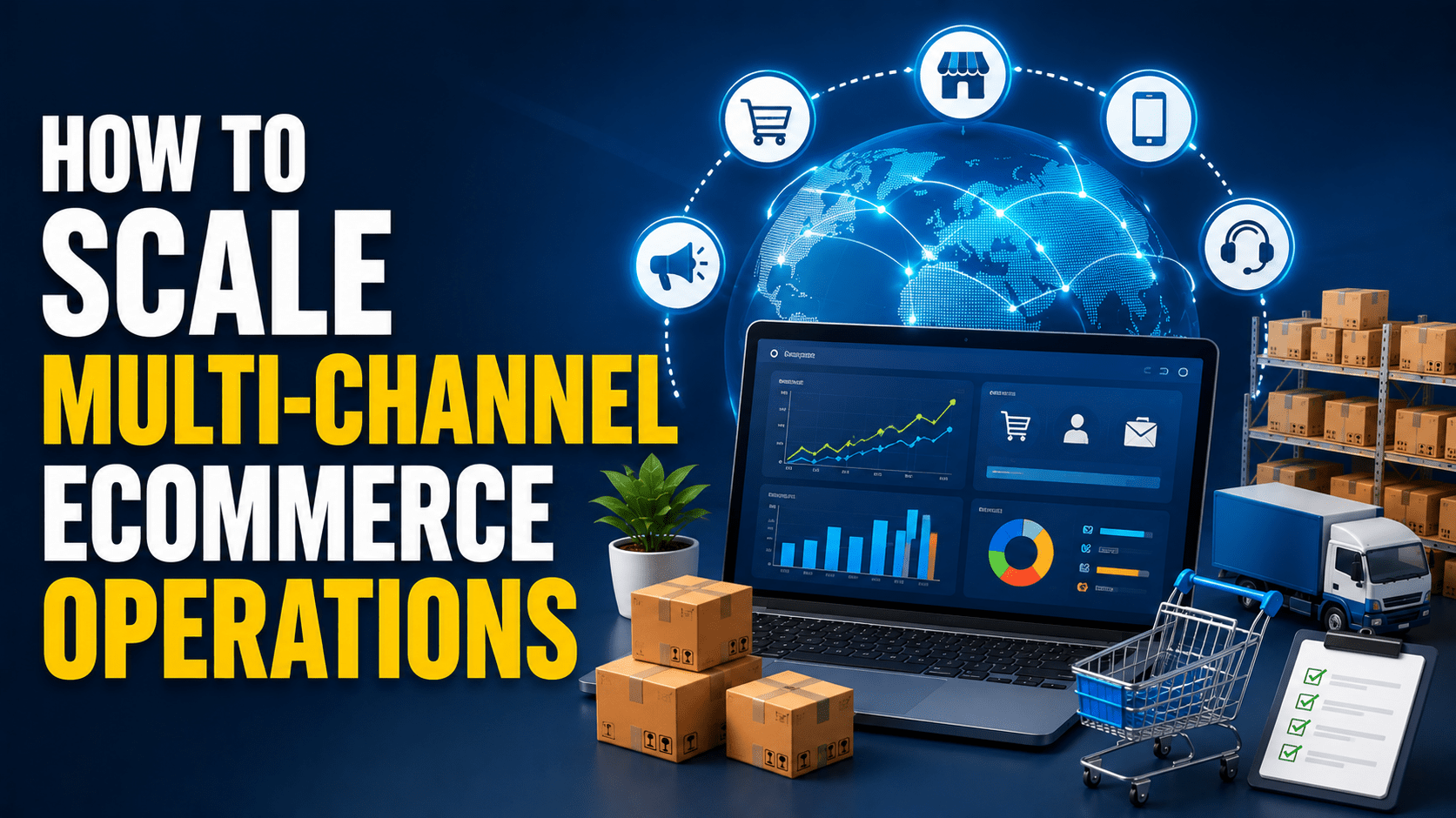
              How to Scale Multi-Channel Ecommerce Operations

              How to Scale Multi Channel Ecommerce Operations

              How to Scale Multi-Channel Ecommerce Operations


              Selling on multiple online marketplaces has become one of the most effective ways for brands to expand their reach and increase revenue. Many businesses begin with a single platform such as Amazon and eventually expand to Walmart, eBay, Etsy, Shopify, Poshmark, and other sales channels. While this strategy creates new growth opportunities, it also introduces operational complexity.


              Managing inventory across multiple platforms, maintaining consistent listings, handling customer inquiries, and optimizing advertising efforts can quickly become overwhelming. Without the right systems in place, growth can create inefficiencies rather than profitability.

              The good news is that scaling multi-channel eCommerce operations successfully is possible with the right strategy.


              At Amz Northland, we help brands streamline operations, improve efficiency, and build scalable systems that support sustainable growth across multiple marketplaces.


              What Is Multi-Channel Ecommerce?

              Multi-channel eCommerce refers to selling products through more than one online sales channel.


              A business may sell through its own Shopify website while also operating on Amazon, Walmart Marketplace, eBay, Etsy, and other platforms. Each channel provides access to different customer segments and buying behaviors.


              Instead of depending entirely on one marketplace, brands diversify their revenue streams and reduce the risks associated with relying on a single platform.

              However, as more channels are added, operational demands increase significantly.


              Why Brands Expand to Multiple Channels

              Expanding into multiple marketplaces allows businesses to reach new audiences and maximize sales opportunities.


              A customer who shops primarily on Amazon may never visit your website. Likewise, Etsy shoppers often have different purchasing preferences compared to Walmart customers.


              By meeting customers where they prefer to shop, businesses can strengthen brand exposure and improve revenue potential.


              Multi-channel selling also provides protection against marketplace changes. If one platform experiences slower performance or policy changes, other channels can help maintain overall business stability.


              For growing brands, diversification often becomes an essential part of long-term success.


              Build Standardized Processes Early

              One of the biggest mistakes businesses make is managing each marketplace differently. As operations grow, inconsistent workflows create confusion and inefficiencies.

              Developing standardized processes helps maintain control.


              This includes creating procedures for:

              • Product listing creation

              • Inventory updates

              • Order processing

              • Customer communication

              • Returns management

              • Advertising reviews

              • Performance reporting

              When teams follow documented processes, scaling becomes more manageable and less dependent on individual employees.

              Strong systems create consistency.


              Invest in Inventory Accuracy

              Inventory management becomes increasingly challenging as additional channels are introduced. Overselling products can damage customer trust and seller metrics, while overstocking ties up capital and increases storage costs.


              Accurate inventory tracking is essential. Businesses should regularly review stock levels, analyze sales trends, and forecast demand based on seasonal fluctuations and marketplace performance.


              Understanding which products perform best across each channel allows brands to make more informed purchasing decisions.

              Effective inventory planning protects both profitability and customer satisfaction.


              Maintain Consistent Brand Messaging

              Customers expect a seamless experience regardless of where they discover your products. Your product descriptions, images, tone of voice, and brand positioning should remain consistent across channels.


              Consistency strengthens trust and reinforces brand recognition. While individual marketplaces have unique requirements, the overall customer experience should align with your brand identity.


              A cohesive presence helps businesses appear more professional and reliable.

              At Amz Northland, we help brands maintain consistency while adapting to marketplace-specific best practices.


              Prioritize High-Performing Channels

              Not every marketplace will contribute equally to your business. Some channels may generate stronger profits, while others serve as valuable brand awareness tools.

              Rather than allocating resources equally across all platforms, businesses should identify where the greatest opportunities exist.


              Analyze factors such as:

              • Sales performance

              • Profit margins

              • Advertising efficiency

              • Customer acquisition costs

              • Growth potential

              Focusing attention on the most productive channels allows businesses to maximize returns while maintaining operational efficiency.

              Scaling successfully often means knowing where to invest more strategically.


              Create a Unified Customer Experience

              Customer expectations continue to rise. Regardless of where customers shop, they expect timely communication, accurate order fulfillment, and professional support. A poor experience on one channel can affect reviews, repeat purchases, and overall brand reputation.


              Businesses should establish service standards that apply across all marketplaces.


              Responding promptly to inquiries and addressing issues professionally helps build customer loyalty. Excellent customer experiences encourage positive feedback and strengthen long-term relationships.


              Use Data to Drive Growth

              Data becomes increasingly valuable as operations expand.

              Every marketplace generates insights that can guide future decisions.


              Businesses should regularly evaluate:

              • Which products generate the highest profits

              • Seasonal demand patterns

              • Advertising performance

              • Conversion trends

              • Customer feedback

              • Inventory turnover rates

              Instead of relying on assumptions, data-driven decision-making allows brands to adapt quickly and identify growth opportunities.

              The most successful multi-channel businesses consistently use insights to refine their strategies.


              Avoid Trying to Do Everything Yourself

              Many entrepreneurs attempt to manage every aspect of their business independently. While this approach may work initially, it often becomes unsustainable as operations grow.


              As additional channels are introduced, the workload increases dramatically.

              Business owners frequently find themselves overwhelmed by listing updates, advertising management, customer inquiries, and operational tasks.


              Delegating responsibilities or partnering with experienced professionals allows businesses to focus on strategic priorities rather than becoming consumed by daily operations.


              Scaling requires support.


              How Marketplace Experts Can Help

              Professional marketplace support can simplify the complexities of multi-channel selling.


              Experienced teams understand how different platforms operate and can help businesses improve efficiency while avoiding common mistakes.


              Support may include:

              • Listing optimization

              • Advertising management

              • Inventory planning

              • Account monitoring

              • Performance reporting

              • Growth strategy development

              Instead of reacting to challenges as they arise, businesses can implement proactive strategies that support expansion.


              At Amz Northland, we work with brands to build scalable processes designed for sustainable multi-channel success.


              The Future of Multi-Channel Ecommerce

              Consumer shopping habits continue to evolve. Customers increasingly move between marketplaces, social commerce platforms, and direct-to-consumer websites before making purchasing decisions.


              Brands that embrace flexibility and build strong operational foundations will be better positioned to adapt to future changes.


              Scaling successfully is no longer just about increasing sales volume. It is about creating systems capable of supporting growth without sacrificing efficiency or customer experience.

              Businesses that prepare today will be more resilient tomorrow.


              Conclusion

              Expanding into multiple marketplaces offers tremendous opportunities, but growth without structure can create unnecessary challenges.


              Successfully scaling multi-channel eCommerce operations requires standardized processes, accurate inventory management, consistent branding, strong customer experiences, and data-driven decision-making.


              Businesses that invest in operational efficiency are better equipped to increase revenue while maintaining profitability.


              Whether you are expanding beyond Amazon for the first time or managing an established multi-channel business, having the right systems and support in place can make all the difference.


              At Amz Northland, we help brands simplify multi-channel operations, optimize marketplace performance, and build strategies designed for long-term eCommerce growth.

              Archives
              Recent Comments

                  Request a quote

                  Frequently Asked Questions

                  Multi-channel eCommerce refers to selling products through multiple online platforms such as Amazon, Walmart, eBay, Etsy, Shopify, and other marketplaces.

                  It helps diversify revenue, reach new customer segments, and reduce dependence on a single platform.

                  Managing inventory, maintaining consistency, and handling operations efficiently across several platforms are common challenges.

                  By implementing standardized processes, improving inventory planning, using performance data, and focusing on operational efficiency.

                  Not necessarily. Businesses should prioritize channels that deliver the strongest performance and growth potential.

                  Consistent customer service helps build trust, encourage repeat purchases, and protect brand reputation.

                  Yes. They can support listing optimization, advertising, inventory planning, and growth strategies across multiple platforms.

                  Amz Northland provides marketplace management services that help brands streamline operations, optimize performance, and scale confidently across multiple eCommerce channels.