
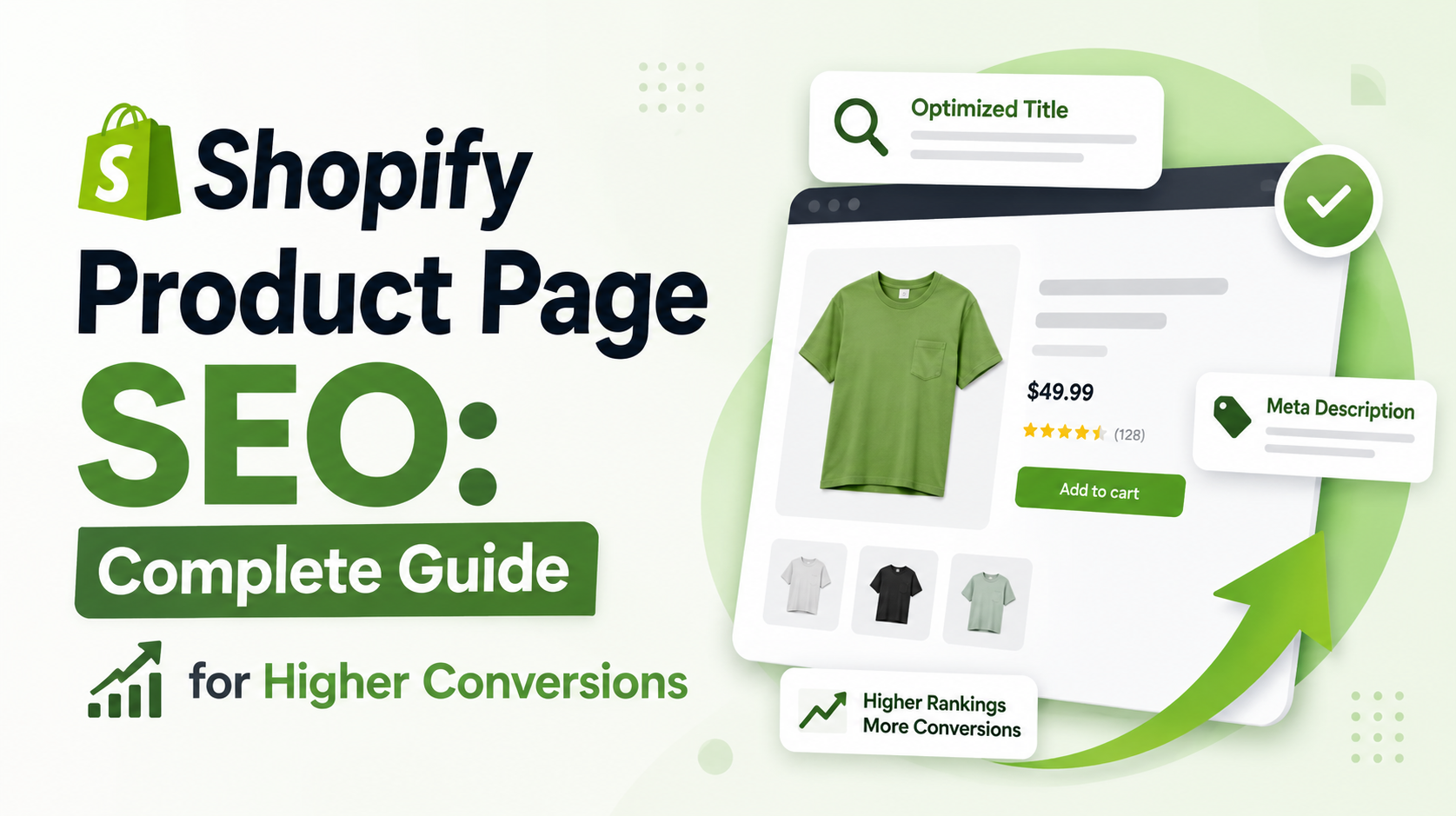
Shopify Product Page SEO: Complete Guide for Higher Conversions
A Shopify store may have great products and attractive designs, but without proper product page SEO, customers may never find those products in search results. Product page optimization is one of the most important parts of ecommerce growth because it directly affects traffic, customer engagement, and conversions.
Today, Shopify SEO is no longer only about adding keywords. Search engines and AI-driven search systems now focus on customer experience, page quality, mobile usability, content relevance, and conversion behavior.
At Amz Northland, we help ecommerce businesses improve Shopify SEO, product page optimization, product visuals, conversion-focused content, and overall marketplace performance. One common issue many online stores face is having product pages that look good but fail to rank or convert effectively.
This guide explains how Shopify product page SEO can improve visibility and increase conversions.
Optimize Product Titles for Search Visibility
Product titles are one of the first elements search engines and customers notice.
A strong Shopify product title should:
• Clearly describe the product
• Include important keywords naturally
• Avoid keyword stuffing
• Remain easy to read
For example, instead of using a generic title like:
“Stylish Bag”
A better SEO-friendly title could be:
“Women’s Vegan Leather Tote Bag for Travel & Everyday Use”
Clear and descriptive titles help both search engines and customers understand products quickly.
Write Product Descriptions for Customers First
Many Shopify stores make the mistake of writing descriptions only for search engines.
Modern SEO works better when product descriptions focus on:
• Customer questions
• Product benefits
• Real-life usability
• Clear readability
Instead of simply listing features, explain how the product helps customers.
Well-structured descriptions often improve:
• Time spent on page
• Customer engagement
• Conversion rates
At Amz Northland, we often recommend shorter paragraphs and natural language because AI search systems prefer content that feels conversational and informative.
Use High-Quality Product Images
Product visuals strongly influence ecommerce performance.
Professional product photography helps customers better understand:
• Product appearance
• Materials
• Features
• Size
• Usage
Strong visuals often increase:
• Click-through rates
• Buyer confidence
• Conversion rates
Infographic product images and lifestyle photography can further improve customer engagement on Shopify product pages.
Optimize Image Alt Text
Image alt text helps search engines understand product visuals.
Good alt text should:
• Describe the image naturally
• Include relevant keywords
• Avoid unnecessary repetition
For example:
“Women’s black vegan leather tote bag with zipper closure”
Optimized alt text may also improve visibility in image search results.
Improve Mobile Shopping Experience
A large percentage of Shopify traffic comes from mobile devices.
Mobile-friendly product pages should have:
• Fast loading speed
• Easy navigation
• Clear product images
• Readable text
• Simple checkout process
Mobile optimization directly affects both SEO performance and conversions.
Customers often leave slow or difficult-to-use product pages quickly.
Add FAQ Sections to Product Pages
FAQs help answer customer concerns before purchase.
They may include:
• Material details
• Product dimensions
• Shipping information
• Return policies
• Usage instructions
FAQ sections can improve:
• Customer trust
• Engagement
• SEO keyword relevance
AI-driven search systems also prefer structured and informative content.
Focus on Conversion-Friendly Content
SEO traffic only matters if visitors convert into customers.
Effective Shopify product pages should include:
• Clear product benefits
• Trust-building content
• Strong visuals
• Organized layouts
• Easy-to-understand information
Confusing or overcrowded product pages often reduce conversion rates.
Simple and clean presentation usually performs better.
Internal Linking Helps SEO
Internal links help search engines understand website structure and product relationships.
Shopify stores can improve SEO by linking:
• Related products
• Category collections
• Blog content
• Buying guides
For example:
• Tote bag pages linking to travel bag collections
• Wallet pages linking to handbag collections
Internal linking improves navigation and supports better website indexing.
Page Speed Affects Rankings & Conversions
Slow-loading Shopify pages can reduce:
• Search visibility
• Customer engagement
• Conversion rates
Common ways to improve speed include:
• Compressing images
• Reducing unnecessary apps
• Using optimized themes
• Simplifying page design
Faster websites usually create better user experience and stronger SEO performance.
AI SEO Is Changing Ecommerce Optimization
Modern ecommerce SEO is increasingly influenced by:
• AI-driven search
• Conversational search behavior
• User engagement signals
• Semantic relevance
• Mobile-first indexing
Because of this, Shopify product pages should focus on:
• Natural language
• Helpful content
• Customer intent
• Visual clarity
• Product understanding
Keyword stuffing is becoming less effective compared to high-quality customer-focused content.
Build Trust with Reviews & Social Proof
Customer reviews help improve both SEO and conversions.
Positive reviews increase:
• Buyer confidence
• Product credibility
• Customer trust
Reviews also add fresh user-generated content to product pages, which may support long-term SEO performance. Social proof has become extremely important in ecommerce decision-making.
Final Thoughts
Shopify product page SEO is about much more than rankings. Strong product pages help businesses attract traffic, improve customer engagement, and increase conversions.
Modern ecommerce SEO combines:
• Search optimization
• Mobile usability
• Product visuals
• Customer-focused content
• Conversion strategy
Businesses that optimize product pages for both search engines and customers are more likely to achieve sustainable ecommerce growth.
At Amz Northland, we help ecommerce businesses improve Shopify SEO, product page optimization, infographic images, product photography, A+ content, and conversion-focused ecommerce strategies for modern online marketplaces.
Recent Posts
- Transitioning from Hobbyist to Professional Seller: Legal and Structural Requirements
- Mastering Product Data Feeds: Preventing Sync Errors Across Multiple Catalogs
- Fast-Tracking Marketplace Approvals: Avoiding Common Pitfalls During Onboarding
- Navigating Marketplace Restrictions: Staying Compliant Without Sacrificing Visual Appeal
- Lighting, Angles, and Conversion: Technical Product Photography Standards That Win
- The Mechanics of Cost-Per-Click: Understanding How Ad Auctions Actually Function
- Structuring Campaigns for Success: The Blueprint for Clean Ad Architecture
- Recession-Proof E-Commerce: Diversification Strategies for Volatile Markets
- Crossing the Border: Navigating Customs, Tariffs, and Fulfillment from Canada to the USA
Archives
- October 2026 (4)
- September 2026 (24)
- August 2026 (24)
- July 2026 (26)
- June 2026 (26)
- May 2026 (26)
- April 2026 (11)
- October 2025 (4)
- September 2025 (5)
Frequently Asked Questions
It helps improve product visibility, customer engagement, and ecommerce conversions.
Clear and keyword-focused titles help search engines and customers understand products more easily.
Well-written descriptions explain product benefits and help customers make buying decisions.
High-quality visuals improve customer engagement, click-through rates, and buyer confidence.
Alt text describes images for search engines and can improve image search visibility.
Most ecommerce traffic now comes from mobile devices, making mobile usability critical for SEO and conversions.
FAQs improve customer understanding and add relevant keyword-rich content to product pages.
Recent Comments