
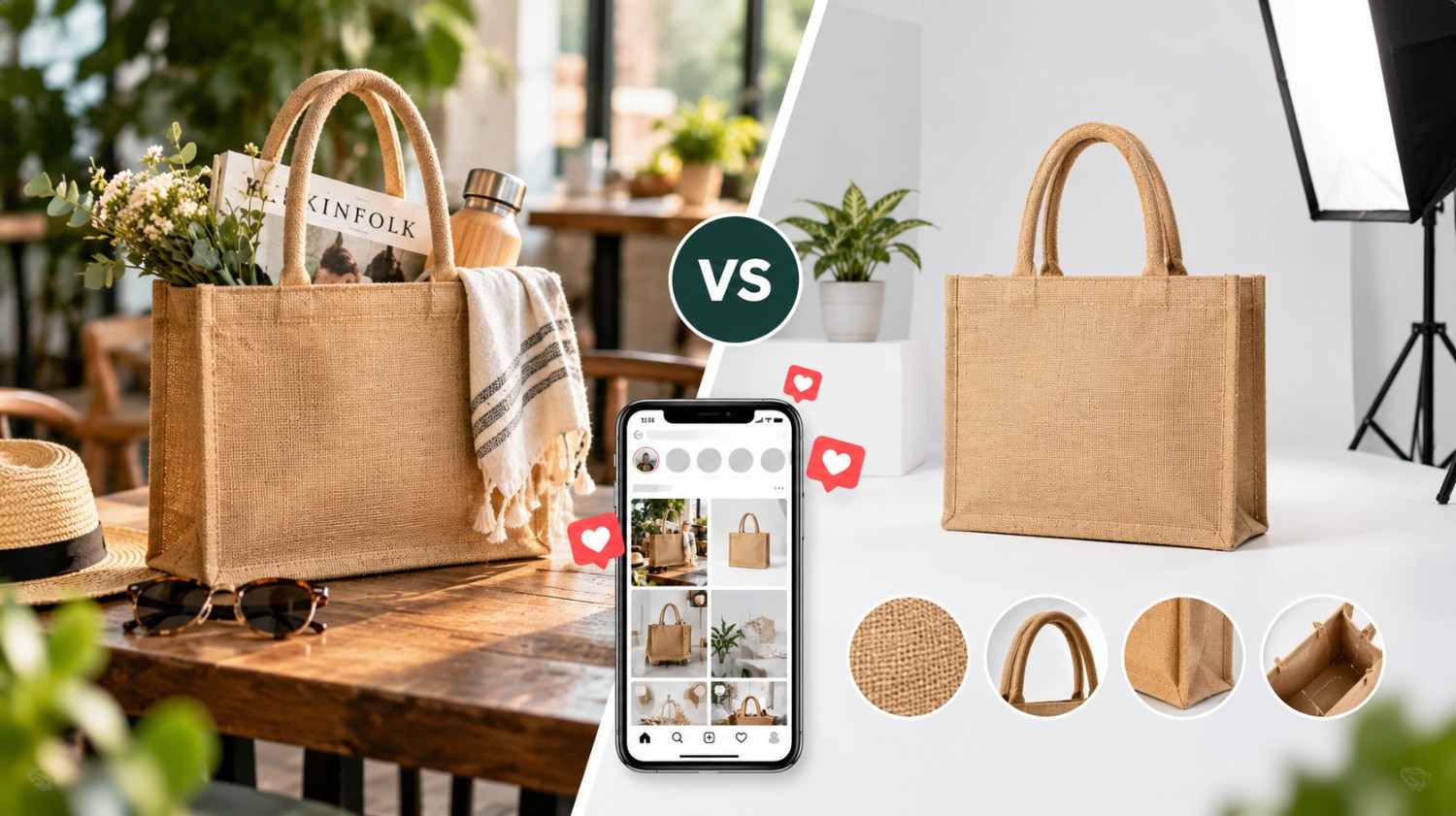
Lifestyle Imagery vs. Studio Shots: Which Visuals Actually Stop the Scroll?
In eCommerce, customers often see a product image before they read the title, description, reviews, or specifications. That makes visual presentation one of the most important parts of a product listing.
But what type of photography actually captures attention? Should brands prioritize clean studio shots, or do lifestyle images create a stronger connection with shoppers?
The answer is not simply one or the other. Studio photography provides clarity and product accuracy, while lifestyle imagery adds context, emotion, and a sense of how the product fits into everyday life. A strong visual strategy often combines both.
For brands selling in Canada and the USA, understanding the difference between lifestyle imagery and studio photography can help create stronger product listings and more effective e-Commerce Marketing campaigns.
What Makes Studio Product Photography Effective?
Studio photography places the product at the center of attention. Clean backgrounds, controlled lighting, accurate colors, and detailed compositions allow shoppers to examine what they are considering.
For marketplace listings, this clarity is especially valuable. Customers need to understand the product’s shape, size, material, finish, and key physical characteristics without distractions.
AMZ Northland’s product photography services include clean hero images, detail shots, multiple angles, and marketplace-compliant photography designed to improve product understanding and presentation.
Studio images are therefore particularly effective for the informational stage of the buying journey. They answer a basic question: “What exactly am I buying?”
Why Lifestyle Imagery Stops the Scroll
Lifestyle photography answers a different question: “What would this product look like in my life?”
Instead of showing an item by itself, lifestyle imagery places it in a relevant environment. A handbag might be shown during travel, a home product in a styled room, or an accessory being used as part of an outfit.
This creates context that a plain product image cannot always communicate.
AMZ Northland notes that lifestyle visuals can help customers visualize products in real-world situations while creating emotional connections and improving engagement.
This makes lifestyle imagery particularly powerful for social media, advertising, marketplace galleries, and product pages where brands need to capture attention quickly.
Lifestyle vs. Studio: Which One Converts Better?
There is no universal winner because the two formats serve different purposes.
Studio shots are excellent for accuracy, consistency, product details, and marketplace requirements. Lifestyle images are stronger for storytelling, emotional appeal, context, and brand differentiation.
The most effective product image strategy often uses both.
A primary studio image can immediately establish what the product is. Additional lifestyle images can demonstrate how it is used. Detail shots can communicate craftsmanship or materials, while infographics can explain dimensions, features, and benefits.
AMZ Northland recommends a combination of white-background hero imagery, lifestyle images, infographics, and detail photography for marketplace listings.
The First Image Has a Different Job
Not every image in a product gallery needs to accomplish the same objective.
The primary image should communicate the product quickly and clearly. Supporting images can then build desire and answer questions.
This distinction is important because shoppers often scroll rapidly, particularly on mobile devices. The first visual needs immediate clarity, while the following images should progressively provide more information.
A strong sequence might begin with a clean studio image, move into a lifestyle scene, highlight key features with an infographic, show product details, and finish with another usage scenario.
This creates a visual story rather than a collection of unrelated photographs.
Lifestyle Photography Builds Brand Personality
Studio photography can create consistency, but lifestyle imagery can give a brand personality.
Two companies may sell similar products, yet their lifestyle photography can make them appear completely different. One might use minimalist interiors and neutral styling, while another uses vibrant environments and energetic models.
The visual setting becomes part of the brand message.
For premium products, lifestyle imagery can communicate aspiration. For practical products, it can demonstrate usefulness. For fashion products, it can show styling possibilities. For home products, it can demonstrate scale and placement.
This is why e-Commerce Photography should be connected to the broader brand strategy rather than treated as a simple product-listing requirement.
Lifestyle Images Are Powerful for Social and Advertising
A clean studio image is highly useful on product pages, but lifestyle imagery can have an additional advantage: it naturally fits visual marketing channels.
Social media feeds, display advertising, paid campaigns, and brand storytelling often benefit from images that communicate an idea quickly.
A lifestyle photograph can show the product and the experience surrounding it in one frame.
This makes lifestyle imagery a valuable asset beyond marketplaces. A single professionally produced scene may be adapted for social media marketing, advertising campaigns, website banners, email campaigns, and other e-Commerce Marketing activities.
Product Photography and Marketplace Management
Visual content also needs to work within a larger marketplace strategy.
Businesses selling across Amazon, Walmart, eBay, Etsy, Poshmark, Shopify, and other platforms need consistent product presentation while adapting images to the requirements and customer behavior of each channel.
This is where Marketplace Management becomes important. Product photography, listing optimization, catalog organization, A+ Content, advertising, and product positioning should work together.
AMZ Northland provides marketplace management across multiple platforms and combines listing optimization, creative services, catalog management, and marketplace strategy.
The Importance of Mobile-First Visuals
Many shoppers encounter product imagery on relatively small screens. Images therefore need to communicate their message without requiring excessive zooming or careful inspection.
Strong contrast, clear composition, recognizable product shapes, and uncluttered layouts can help images remain understandable on mobile devices.
Lifestyle imagery should also avoid excessive visual complexity. The environment should support the product rather than compete with it.
Studio photography has an advantage here because its controlled composition makes the product immediately identifiable.
Use Data to Refine Your Visual Strategy
Photography should not be based entirely on personal preference. Brands can evaluate performance through metrics such as click-through rates, engagement, conversion rates, and customer feedback.
If lifestyle imagery attracts attention but studio photography helps customers make purchasing decisions, both have a role.
Testing different image sequences, lifestyle environments, crops, models, backgrounds, and feature callouts can reveal which visual combinations work best for a particular audience.
The objective is to build an image system based on customer behavior rather than assumptions.
A Visual Strategy That Works Across Channels
The strongest approach is usually not lifestyle versus studio. It is lifestyle plus studio.
Studio imagery establishes accuracy and clarity. Lifestyle imagery creates context and emotional appeal. Detail shots demonstrate quality. Infographics explain benefits. A+ Content connects visuals with brand storytelling.
Together, these assets can create a stronger customer journey from initial attention to purchase confidence.
For businesses seeking Online Marketplace Services, photography should therefore be integrated with listing optimization, marketplace SEO, catalog management, advertising, and conversion strategy.
How AMZ Northland Supports eCommerce Visual Strategy
AMZ Northland helps brands improve their marketplace presence through e-Commerce Marketing, Marketplace Management, e-Commerce Photography, and Online Marketplace Services.
Its creative services include studio photography, lifestyle imagery, product detail shots, infographics, A+ Content, and marketplace-compliant visual assets.
AMZ Northland also combines photography with listing optimization, catalog management, marketplace SEO, advertising, and multi-channel strategy across platforms such as Amazon, Walmart, eBay, Etsy, Poshmark, Faire, and Shopify.
For brands in Canada and the USA, the goal is not simply to create attractive images. It is to create visuals that capture attention, communicate value, strengthen brand recognition, and help customers feel confident about purchasing.
The most effective visual strategy gives every image a specific job. Studio photography tells shoppers what the product is. Lifestyle imagery shows why they might want it. Together, they can create a product presentation that is both informative and impossible to ignore.
Recent Posts
- Transitioning from Hobbyist to Professional Seller: Legal and Structural Requirements
- Mastering Product Data Feeds: Preventing Sync Errors Across Multiple Catalogs
- Fast-Tracking Marketplace Approvals: Avoiding Common Pitfalls During Onboarding
- Navigating Marketplace Restrictions: Staying Compliant Without Sacrificing Visual Appeal
- Lighting, Angles, and Conversion: Technical Product Photography Standards That Win
- The Mechanics of Cost-Per-Click: Understanding How Ad Auctions Actually Function
- Structuring Campaigns for Success: The Blueprint for Clean Ad Architecture
- Recession-Proof E-Commerce: Diversification Strategies for Volatile Markets
- Crossing the Border: Navigating Customs, Tariffs, and Fulfillment from Canada to the USA
Archives
- October 2026 (4)
- September 2026 (24)
- August 2026 (24)
- July 2026 (26)
- June 2026 (26)
- May 2026 (26)
- April 2026 (11)
- October 2025 (4)
- September 2025 (5)
Frequently Asked Questions
Neither format is universally better. Studio images provide clarity and product accuracy, while lifestyle imagery provides context and emotional appeal. Combining both can create a more complete product presentation.
Lifestyle images help customers visualize products in real-world situations. They can communicate usage, create emotional connections, strengthen brand personality, and make product content more engaging.
Studio images are ideal for showing the product clearly, accurately, and consistently. They are particularly useful for hero images, product details, multiple angles, and marketplace listing requirements.
Strong lifestyle photography can help customers understand how a product fits into their lives and can increase engagement. However, conversion performance depends on the complete listing, including pricing, reviews, product quality, copy, and other factors.
The ideal number depends on the marketplace, category, product, and available information. AMZ Northland notes that many listings use approximately six to nine images covering different angles, features, usage scenarios, and details.
e-Commerce Photography provides the visual assets required for product listings, A+ Content, advertising, websites, and marketplace storefronts. Integrating photography with Marketplace Management helps keep product presentation consistent while supporting channel-specific requirements.
Yes. A well-planned photography session can produce studio images, lifestyle scenes, detail shots, advertising assets, social media content, website visuals, and marketplace imagery. This can make professional photography a valuable component of broader e-Commerce Marketing.
Recent Comments