
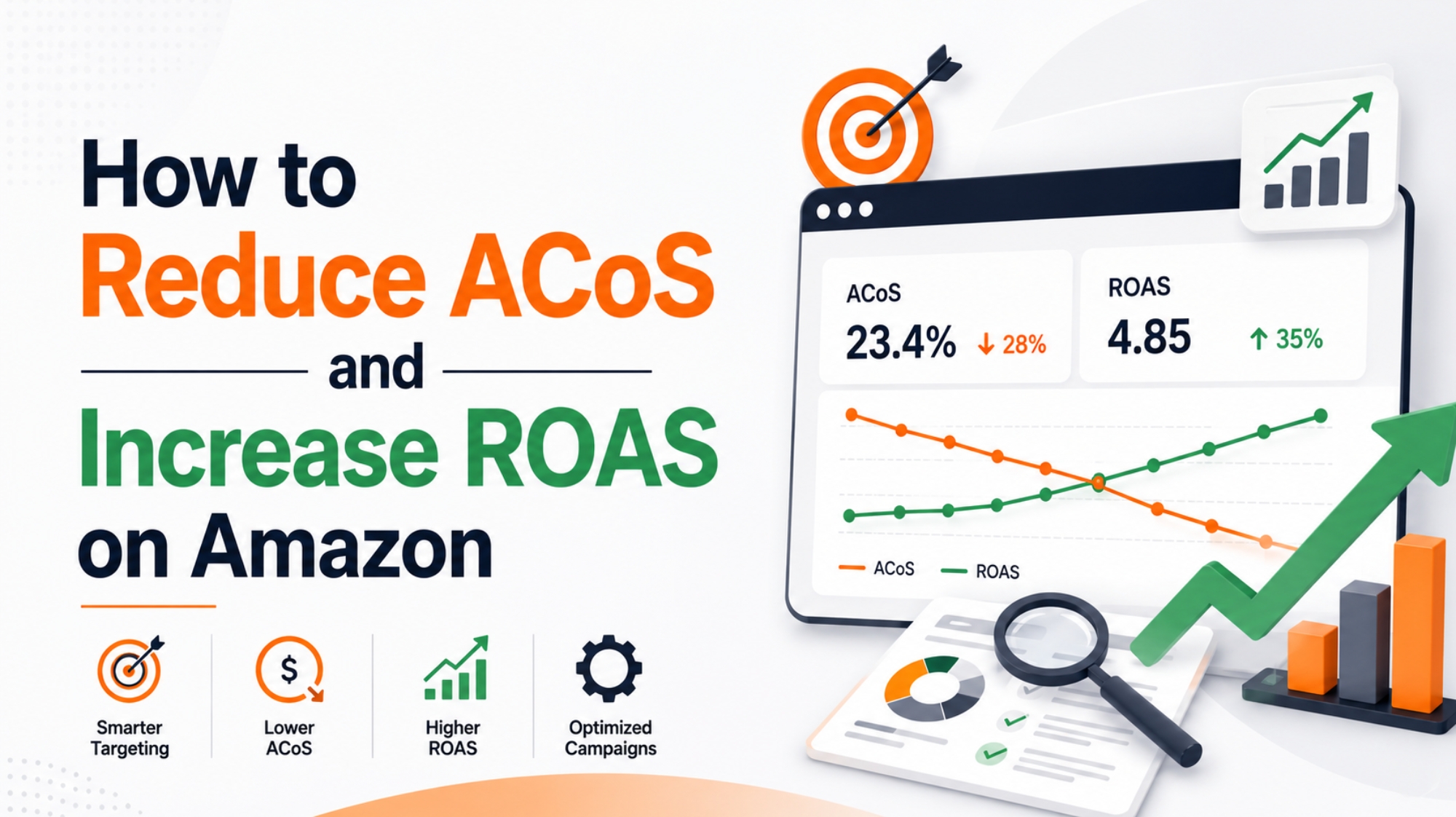
How to Reduce ACoS and Increase ROAS on Amazon
What is ACoS and ROAS?
ACoS (Advertising Cost of Sales)
ACoS shows how much you spend on ads to generate sales.
👉 Lower ACoS = Better profitability
ROAS (Return on Ad Spend)
ROAS shows how much revenue you earn for every rupee spent on ads.
👉 Higher ROAS = Better performance
Why ACoS is High (Common Reasons)
• Targeting irrelevant keywords
• Poor product listing quality
• High competition bidding
• Low conversion rates
• Lack of campaign optimization
👉 Fixing these areas is key to improving performance
Step-by-Step: How to Reduce ACoS on Amazon
1.Optimize Your Product Listing First
Before running ads, your listing must convert.
Focus on:
• SEO-optimized title
• High-quality images
• Clear bullet points
• Strong product description
👉 Better conversion rate = Lower ACoS
2.Target High-Intent Keywords
Not all keywords are equal.
Use:
• Long-tail keywords
• Buyer-intent search terms
• Relevant product-specific keywords
👉 This reduces wasted ad spend
3.Use Negative Keywords
Block irrelevant searches that don’t convert.
👉 Prevents unnecessary spending and improves targeting
4.Optimize Bids Regularly
Avoid overbidding on low-performing keywords.
👉 Adjust bids based on performance data
5.Structure Campaigns Properly
Use a mix of:
• Automatic campaigns (for discovery)
• Manual campaigns (for control)
👉 This improves efficiency and data insights
6.Focus on Conversion Rate Optimization
Improve:
• Pricing
• Reviews
• Product presentation
👉 Higher conversions = Lower ACoS
How to Increase ROAS on Amazon
1.Scale High-Performing Campaigns- Identify campaigns with strong results and increase budget strategically.
2.Improve Product Value Perception- Better branding, images, and pricing increase purchase likelihood.
3.Retarget Interested Customers- Use remarketing strategies to capture missed opportunities.
4.Optimize for Profit, Not Just Sales- Focus on campaigns that generate profit—not just revenue.
Advanced Tips for Better Results
- Analyze search term reports regularly
• Pause low-performing keywords
• Test different ad creatives
• Use seasonal and trend-based strategies
👉 Continuous optimization is the key to success
Common Mistakes Amazon Sellers Make
• Running ads without listing optimization
• Ignoring data and analytics
• Not using negative keywords
• Overbidding on competitive keywords
👉 These mistakes increase ACoS and reduce profitability
How Amz Northland Helps You Improve ACoS & ROAS
At Amz Northland, we help Amazon sellers build profitable ad strategies—not just run ads.
Our services include:
• Amazon PPC campaign management
• Keyword research and optimization
• Listing SEO and conversion improvement
• Data-driven bid strategy
• Performance tracking and scaling
👉 We focus on reducing ad spend waste and maximizing returns
Profitability Comes from Optimization, Not Just Advertising
Running ads on Amazon is not enough.
Success comes from understanding data, refining strategy, and continuously improving performance.
Turn Your Amazon Ads into Profit
👉 Partner with Amz Northland to reduce ACoS, increase ROAS, and build a profitable Amazon PPC strategy that drives real growth.
Recent Posts
- Structuring Campaigns for Success: The Blueprint for Clean Ad Architecture
- Recession-Proof E-Commerce: Diversification Strategies for Volatile Markets
- Crossing the Border: Navigating Customs, Tariffs, and Fulfillment from Canada to the USA
- Scaling DTC Brands: When to Bring SEO and Paid Media In-House vs. Outsourcing
- Hiring Your First E-Commerce Agency: Red Flags, Green Flags, and ROI Expectations
- Creating Digital Catalogs That Retail Buyers Can’t Resist
- Pricing for Profit: Setting Margins and Minimum Order Quantities for Wholesale Buyers
- Mobile-First Storefronts: Designing Seamless Experiences for Smartphone Shoppers
- The Content Advantage: How Rich Media Content Drives Repeat Customer Loyalty
Archives
- September 2026 (22)
- August 2026 (24)
- July 2026 (26)
- June 2026 (26)
- May 2026 (26)
- April 2026 (11)
- October 2025 (4)
- September 2025 (5)
Frequently Asked Questions
It depends on margins, but lower ACoS generally means better profitability.
Optimize listings, use negative keywords, and adjust bids.
Higher ROAS indicates better return on ad spend.
Possible reasons include poor listing quality, wrong keywords, or pricing issues.
Regularly—weekly or bi-weekly for best results.
Yes, with proper strategy and consistent optimization.
Recent Comments